Measurement and testing
Published over 16 years ago. See the latest and most current information on Measurement and testing.
A recent evaluation conducted compared a PID cell incorporating Fence Electrode Technology against one equipped with Humidity Compensation. Test results prove that an Ion Science PhoCheck PID with Fence Electrode Technology is twice as accurate, more stable and faster than a PID with Humidity Compensation.
The published data shows that when subjected to high humidity, PhoCheck is much less subject to drift, while responding and clearing out faster, resulting in much fewer non-reports.
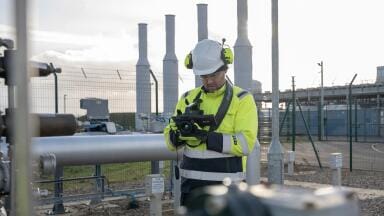
Target industries and applications for PhoCheck include; petrochemical, environmental, HazMat/WMD, emergency response, soil headspace analysis and confined space entry.
PIN 27.5 Oct/Nov 26


 Product directory


.jpg)










.jpg)



.jpg)