Safety
Published over 3 years ago. See the latest and most current information on Safety.
International regulations have established benzene limits, imposing requirements on employers to assure that no employee is exposed to an airborne concentration of benzene in excess of the TWA (time-weighted average) limit. In the USA and in most European countries, the 8-hour TWA limit is 1 ppm, although lower levels have recently been proposed in Germany. Similarly, the American Conference of Governmental Industrial Hygienists (ACGIH) has proposed a lowering of the benzene 15-minute STEL (short-term exposure limit) and TWA limits. Currently, the OSHA permissible exposure limit (PEL) is 1 ppm (8-hr TWA), and 5 ppm during any 15-minute work period. The NIOSH recommended airborne exposure limit (REL) is 0.1 ppm (10-hr TWA) and 1 ppm during any 15-minute work period.
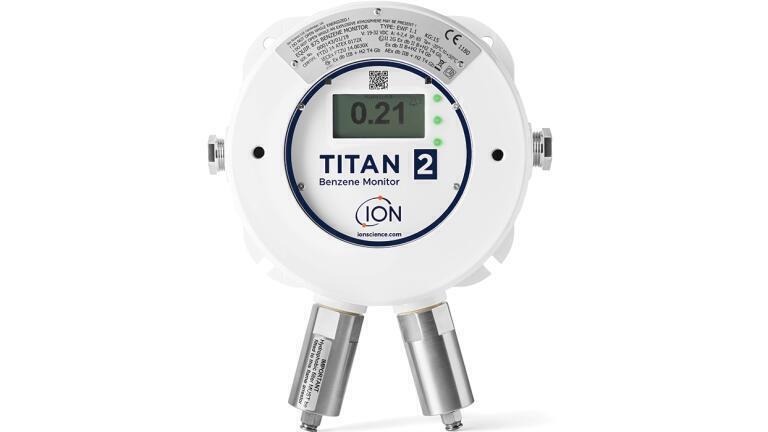
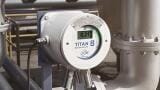
ION Science Ltd are excited to announce the development of Titan 2 which will launch in 2023!
This instrument has been developed to meet increasingly stringent international legislation. Current EU regulation defines a maximum eight-hour time-weighted average for benzene of 1 ppm, which equates to a concentration of 3.25 mg/m3.
As part of the upgrade package the Titan 2 now has integrated the new 10.0 eV HS sensor which reduces the likelihood of cross sensitivity and can detect benzene rapidly at levels as low as 20 parts per billion (0.02 parts per million). This enhanced detection range complies with the benzene regulation changes and makes the instrument ready for the lower levels that will come into force in 2024.
For more information, complete the short form here.
PIN 27.5 Oct/Nov 26

 Product directory


.jpg)
















.jpg)