Measurement and testing
Published over 3 years ago. See the latest and most current information on Measurement and testing.
Benzene is an industrial chemical commonly found throughout the petrochemical industry. It is extremely hazardous and a recognised human carcinogen so it’s essential that sub parts per million (ppm) benzene concentrations can be measured rapidly and accurately in the presence of the hundreds of aromatic and aliphatic compounds encountered in the industry.
Traditionally it has not been possible to collect accurate measurements due to a lack of available technology. However, ION Science offers a range of high performance personal, portable and fixed benzene specific detectors for use in hazardous applications across the world.
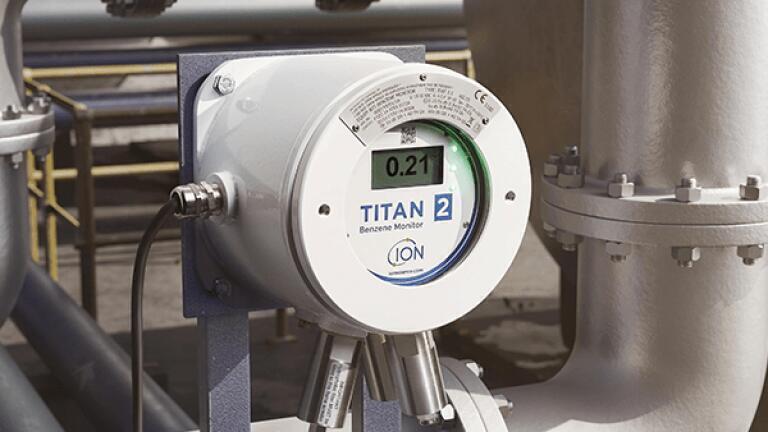
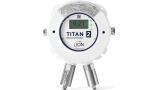
For data critical zones, ION Science are delighted to announce the upcoming launch of Titan 2. As part of the upgrade package from the original Titan fixed instrument, the Titan 2 has integrated the new 10.0 eV HS sensor which reduces the likelihood of cross sensitivity and can detect benzene rapidly at levels as low as 20 parts per billion (0.02 parts per million). This enhanced detection range complies with the benzene regulation changes and makes the instrument ready for the lower levels that will come into force in 2024. For more information on Titan 2, please register your interest here.
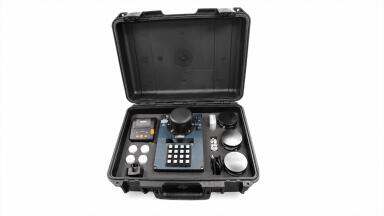
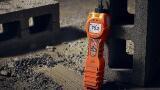
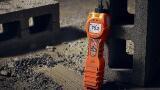
With a robust and reliable design, the ION Science Tiger XT provides a dynamic detection of one ppb to 20,000 ppm, offering the widest measurement range on the market. It is easy to set up and provides advanced volatile organic compound (VOC) detection with advanced software features. It has a fast response time of just two seconds and can be connected directly to a PC via the USB offering rapid data download capabilities.
The versatile Tiger XT Select model has two mode operation for the accurate detection of benzene and total aromatic compounds (TACs). Utilising the high output ION Science 10.0 eV PID, a reading for TACs is seen immediately on start-up. Should TACs be detected, a benzene pre-filter tube can be easily attached to allow rapid detection and selective measurement of benzene. Throughout the measurement process, Tiger XT Select continues to display real time data, keeping the worker safe. Benzene concentrations are displayed down to ppb levels.
As the world’s smallest, lightest and most sensitive gas detector, ION Science’s Cub 10.0 eV TAC features audible, vibrating and flashing LED alarms designed to give workers an early warning of exposure to hazardous gases, including benzene, before they reach harmful levels.
PIN 27.5 Oct/Nov 26


 Product directory


.jpg)












.jpg)




.jpg)