Lubricant analysis
Savant Laboratories has a long-standing history of over 56 years evaluating lubricants, including the ability to provide wear protection in mechanical equipment. Sulphur has long been used in the lubrication industry to improve the surface-to-surface interactions of metals and extreme pressure properties for both oils and greases. These additives react with metal surfaces under pressure, forming metal-sulphide tribofilms. These films take the form of protective, crystalline structures that can be replenished quickly as they are worn off the metals' surface. They also act as protective shields, preventing scuffing, wear, and other metal-interactive fatigue.
Sulphur EP (extreme pressure) additives can be thought of in two broad categories: Active and Inactive. Active sulphur compounds contain longer sulphur chains and are more reactive with metal surfaces than inactive sulphur compounds. The trade-off being that these active sulphur additives can have an adverse effect on the corrosion resistance of the lubricant, particularly in the case of soft, yellow metals such as copper. Selecting the proper additive is often a balancing act between wear protection and corrosion resistance.
Over the years, methods such as ASTM D5453 have been utilised to determine total sulphur content but cannot assess the lubricants' anti-wear characteristics. Tribological testing is critical in determining if a formulation meets the applications' need for wear protection. At Savant Labs, we can conduct both industry standard 4-ball and SRV testing as well as advanced SRV friction and analysis that can mimic specific contact geometries and load applications. Even these standard tests, listed below, do not always replicate the necessary geometries or conditions for specific applications. Savant Labs has an expert team that will assist with modifying these tests to better simulate those conditions.
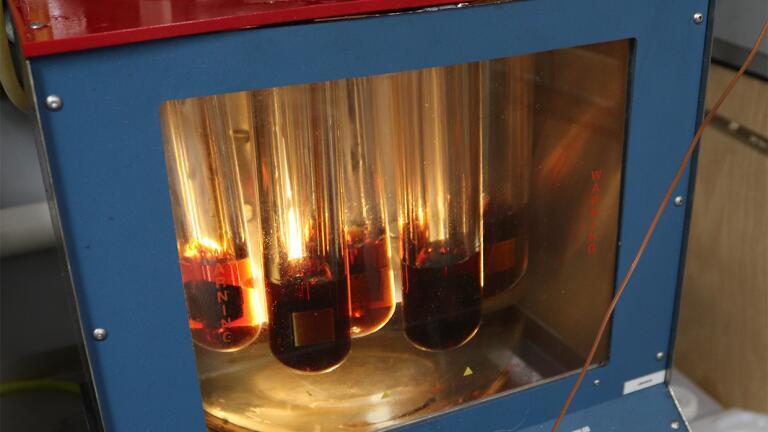
Evaluation of corrosion resistance is equally important in evaluating a lubricant's acceptability for use, particularly in cases where the lubricant encounters yellow metals. To address these concerns Savant labs provides a full slate of standard corrosion testing and has also developed an innovative test platform, the Tannas-EV Wire Corrosion Test (WCT) which allows for the in-situ examination of the rate of corrosion on a copper surface.
There are increasing thermal and mechanical demands across the gamut of lubrication applications. Testing for both sulphur content and its performance implications is essential for the longevity of mechanical equipment. With its combination of chemical and tribological expertise, Savant Labs helps both lubricant formulators and end-users to ensure that their products and equipment meet the rigorous demands of today’s systems.
PIN 27.5 Oct/Nov 26


 Product directory


.jpg)












.jpg)