Analytical instrumentation
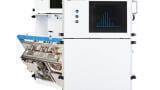
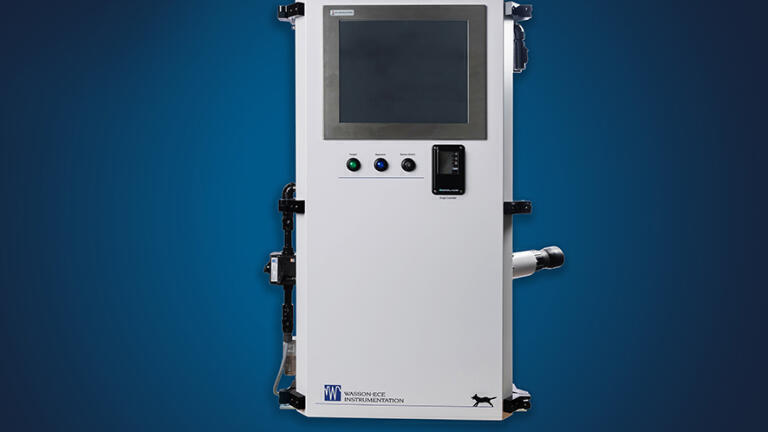
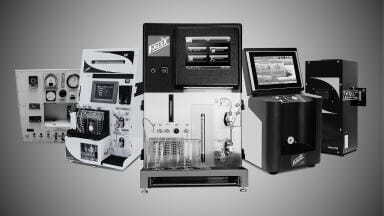
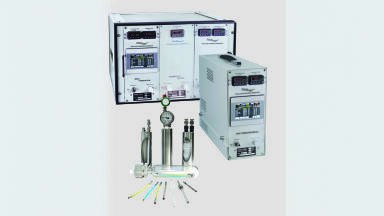
Wasson-ECE Instrumentation has announced a significant expansion to its Eclipse Process Analytics portfolio, enhancing its capabilities for petroleum and hydrocarbon processing applications with a suite of advanced gas chromatography (GC) systems. The latest additions include the Eclipse Pup, Eclipse-VUV, and Eclipse Neutrino; the latter being the world’s first GC-MS system explicitly engineered for online process applications.
The Eclipse Pup provides an accessible yet powerful solution for labs looking to transition from bench-top analysis to continuous process monitoring. Ideal for single-column applications, the system incorporates temperature-programmable micro-convection oven technology and various detectors, including FID, TCD, and PDHID. It is fully certified for operation in hazardous areas, meeting the requirements for industrial environments while maintaining optimal performance.
The Eclipse-VUV, developed in collaboration with VUV Analytics, provides a robust solution for online gasoline analysis, offering detailed characterisation of PIONA, BTEX, and oxygenates within a 40-minute analysis cycle. The system supports the ASTM D8071 method, providing streamlined calibration and reliable quantification of hundreds of components in finished gasoline. This marks a significant advancement in automated, field-deployable fuel analysis.
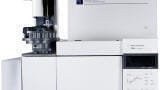
The Eclipse Neutrino combines Wasson-ECE’s established Eclipse architecture with Agilent’s 5977C mass spectrometer, resulting in the only commercially available process-grade GC-MS. This integrated solution enables the precise identification of challenging trace components such as arsine, phosphine, and sulphur species, including mercaptans. Multiple detector configurations extend the Eclipse Neutrino’s application scope to include detailed hydrocarbon analysis for complex process streams.
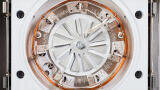
All Eclipse systems feature Wasson-ECE’s patented micro-convection oven technology and laboratory-grade hardware, supporting up to eight capillary columns and complete electronic pressure programming. Designed for deployment in hazardous environments, the systems meet Class I, Division 2, and ATEX Zone 2 certifications, ensuring safe operation in the most demanding industrial conditions.
PIN 27.4 Aug/Sept 2026



 Product directory


.jpg)











.jpg)

.jpg)