Analytical instrumentation
Laboratory instruments can have remarkably long working lives. That is generally a good thing. But longevity also raises a familiar question for laboratory managers: when does maintaining a proven instrument become less practical than moving to the next generation?
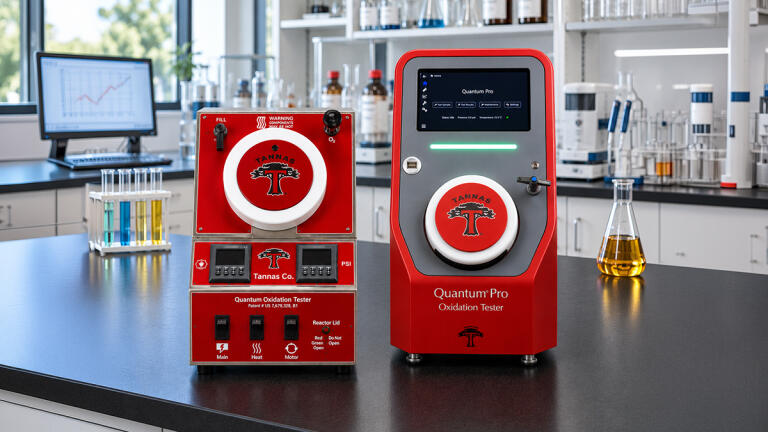
For laboratories using the Tannas Quantum® Oxidation Tester, that decision does not necessarily come down to changing what is being measured. The Quantum Pro continues to support established oxidation test methods, including ASTM D2272 and D2112 for RPVOT and ASTM D4742 and D7098 for TFOUT. The more significant difference is how the laboratory performs and manages that testing.
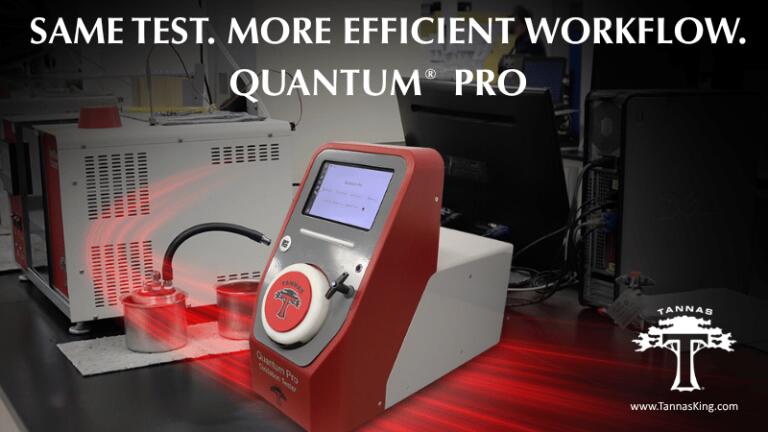
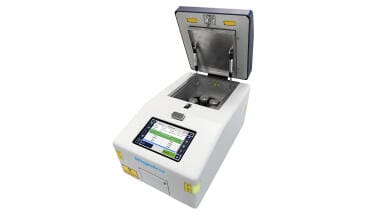
One of the most noticeable changes is the elimination of the dedicated computer. The Quantum Pro incorporates an HMI touchscreen, providing onboard controls, live test data and data acquisition without requiring a separate laptop or PC. This is a practical improvement for laboratories with limited bench space, or where maintaining computers connected to individual instruments creates an additional IT burden.
Sample preparation has also become less manual. Automated fill and purge functions reduce operator involvement during chamber preparation, while integrated water calibration and closed-loop motor control eliminate several calibration-related tasks associated with earlier systems. These changes may seem incremental individually, but repeated across hundreds of tests, reducing routine operator steps can meaningfully affect laboratory workflow.
Data management is another reason laboratories may want to evaluate older equipment. The Quantum Pro stores results onboard, allows records to be transferred through USB and can automatically submit reports over Ethernet. As laboratories place greater emphasis on traceability, standardised reporting and efficient movement of test data, connectivity is becoming part of instrument performance—not simply an added convenience.
There are operational considerations as well. The dry-cylinder heating design eliminates the liquids traditionally associated with heating the test chamber, reducing potential mess, odours and handling concerns. Tannas also reports that the newer design uses approximately 20–30% less power than its predecessor.
Perhaps the strongest argument for upgrading, however, is continuity. Laboratories do not necessarily want a new instrument to require an entirely new testing process. They want to preserve confidence in established methods while making the testing process more efficient.
That is the distinction between replacing equipment because it is old and modernising because laboratory expectations have changed. Today, productivity, data handling, operator efficiency and energy use increasingly matter alongside the test measurements. For laboratories still operating an original Quantum, those factors make this an appropriate time to evaluate whether the next generation offers enough operational value to justify the transition.
PIN 27.5 Oct/Nov 26


 Product directory


.jpg)









.jpg)


.jpg)





.jpg)