Analytical instrumentation
Here’s how monitoring professionals are creating a new system for the process industries in Middle East.
By Jed Thomas
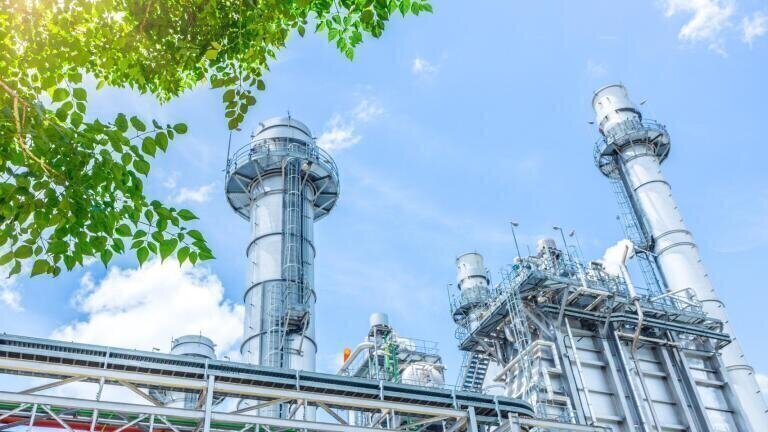
Whilst the Middle East remains a vital engine of the global petrochemical industry, but it presents one of the most challenging environments for process monitoring systems.
Temperatures across much of the region can routinely exceed 50°C in summer, and that’s before factoring in the heat load on steel infrastructure, enclosures, or sun-exposed sensors.
Instruments are pushed well beyond what might be considered harsh conditions elsewhere, raising unique safety concerns for firms operating in this region.
The impact isn’t just on reliability—it affects accuracy, calibration cycles, maintenance planning, and even safety.
One of the most persistent issues is sensor degradation.
High temperatures accelerate wear on everything from electrochemical cells to polymer seals, increasing the risk of drift or outright failure.
Optical and spectroscopic analysers, in particular, can suffer from thermal instability unless carefully shielded or cooled.
Even basic pressure or temperature transmitters can underperform if internal components are exposed to prolonged thermal cycling.
Enclosures—essential in dusty, saline, or hazardous environments—introduce their own complications.
Without proper ventilation or cooling, sealed cabinets can become dangerously hot.
In analyser shelters, underperforming HVAC systems quickly turn into a single point of failure for the entire monitoring chain.
The same goes for junction boxes or control panels exposed to direct sunlight: internal temperatures can exceed safe thresholds even if ambient air feels manageable.
Wiring and connectors also take a hit. UV degradation and thermal expansion over time compromise insulation and create opportunities for signal loss.
This is particularly problematic in remote installations, where downtime caused by an unseen cable fault can mean costly site visits and long delays.
The first step is design. Smart projects in the region are increasingly factoring in heat not just as a weather condition but as a constant environmental constraint.
This means choosing instrumentation with elevated ambient temperature ratings, using passive cooling elements like sunshades and reflective coatings, and—in many cases—designing shelters or enclosures with active cooling from the outset.
Thermal modelling tools are becoming more common at the front end of design, helping engineers predict heat load on critical equipment.
Digitalization is also playing a role. Wireless and remote-monitoring systems reduce the need for long cable runs and offer real-time performance data, making predictive maintenance more viable.
Rather than relying on rigid maintenance cycles, operators can monitor sensor performance continuously and intervene only when degradation becomes likely.
Critically, successful implementation often depends on close collaboration with local integrators and vendors who understand regional constraints.
Off-the-shelf solutions designed for temperate climates often fail quickly in Gulf conditions. By contrast, systems designed and supported with regional experience tend to last longer and perform more reliably.
Ultimately, monitoring under extreme heat is not an unsolvable problem—it’s an engineering challenge.
And like many challenges in the petrochemical world, it rewards those who take a proactive, context-aware approach.
In a region where uptime is critical and conditions are punishing, process monitoring systems that can handle the heat aren’t just useful—they’re essential.
PIN 27.4 Aug/Sept 2026

 Product directory


.jpg)







.jpg)

.jpg)