Analytical instrumentation
Published over 8 years ago. See the latest and most current information on Analytical instrumentation.
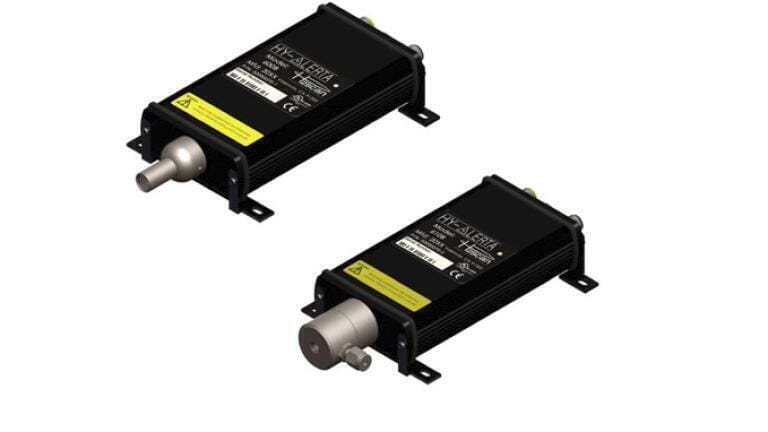
View our Hydrogen Specific Sensor for the Alternative Fuel Industry Application Note featuring our HY-ALERTA™ 600B Fixed Area Hydrogen Monitor & HY-OPTIMA™ 700B Series Process Hydrogen Analyzer by clicking here>>
Safety and process hydrogen measurement in hydrogen electrolyzer/generators/fuel cells/refueling stations for the alternative fuel cell industry
Hydrogen can be generated on-site for fueling stations using hydrogen generators which employ a polymer electrolyte membrane fuel cell (PEM) or electrolyser stack technology.
An electrolyser splits water into hydrogen and oxygen by passing an electrical current through it. A fuel cell is a device that produces electricity by combining a fuel, usually hydrogen, with oxygen. Hydrogen is either used a source or obtained as a by-product. For safety reasons, the hydrogen content in an electrolyzer needs to be lesser than 4% H2 v/v to ensure a safe operation of stationary electrolyser and refueling stations. The anodic side of a fuel cell vehicle needs to control the amount of feed hydrogen to ensure process efficiency of a PEM based fuel cell and membrane integrity. Continuous hydrogen measurement is necessary in CO2, H2O environments.
H2scan sensors employ a solid state hydrogen specific technology based on a palladium alloy that provides continuous and reliable H2 measurements. The sensing material is inherently specific to hydrogen and has the capability to operate in a variety of multi-component gas backgrounds including water, CO2 and hydrocarbons. No interference with alkaline or acidic environment is expected.
Safety: Conventional catalytic bead or metal oxide sensors though widely used for detecting combustible gases are not inherently hydrogen specific. H2scan sensors are inherently hydrogen specific and can detect H2 explosive environments without any false alarms. (Series 600)
H2 Generators / Electrolyzers: For a hydrogen generator, the concentration of hydrogen needs to be detected in an O2 rich environment at the outlet of the stationary electrolyser. H2scan sensors can measure H2 effectively in O2 rich or O2 free environments that ensures the hydrogen delivered to the end user is well below the explosive or flammable levels (Model 720)
For further information or to place an order, please contact:
Gid Herman (661) 775-9575 ext. 606
PIN 27.4 Aug/Sept 2026




 Product directory


.jpg)








.jpg)

.jpg)