Analytical instrumentation
Published over 13 years ago. See the latest and most current information on Analytical instrumentation.
Recently ASTM published the 2012 revision for the ASTM D7756 method for residues analysis in LPG by GC with a liquid, on-column injection. The revision includes the extension of the application range for the method to the analysis of benzene, toluene, C7-C10 hydrocarbons and DIPA in LPG.
Da Vinci Laboratory Solutions (Netherlands) developed the on-column injection technique that is incorporated in the ASTM D7756 standard in close cooperation with Shell Global Solutions. The technique was introduced in 2010 as the Liquefied Gas Injector (LGI) to inject liquefied gases at room temperature directly onto a GC column.
In December 2011, ASTM approved a standard method for oily residues in LPG (ASTM D7756-11) based on this innovative injection technique for large volume pressurised gas such as LPG.
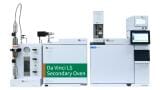
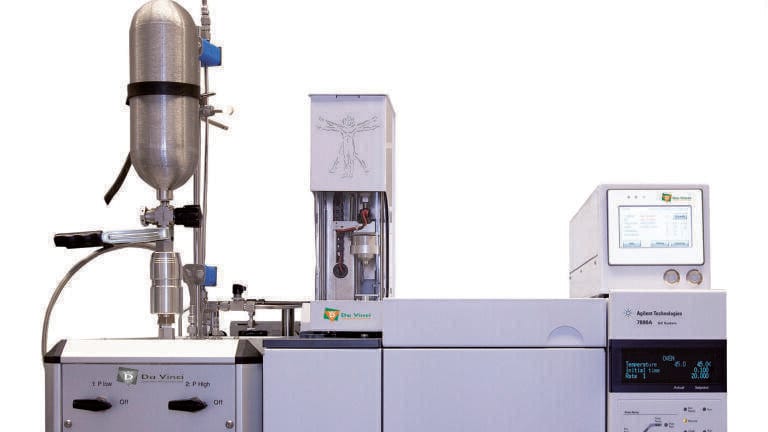
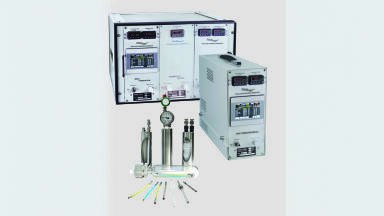
The direct injection of the LGI is based on the proven Gasoline Direct Injection technique used by the automotive industry to inject fuel into the automotive engine combustion chamber. The LGI is configured on top of a GC and consists of the Gasoline Direct Injector with an on-column needle attached and mounted on a sliding device.
The pressure station on the left side of the GC enables a constant pressure of the liquid sample to inject a representative sample. The sample container is installed on top of the pressure station and is connected to 25 bar nitrogen. The waste sample is vapourised and safely connected to a central waste system. The controller box on top of the right side of the GC drives the injector.
The LGI offers laboratories a safe, fast and accurate GC standard for the analysis of oily residues, benzene, toluene, C7-C10 and DIPA in C3 and C4 streams. Benefits include: Alternative for ASTM D2158, EN 15470, EN 15471 & ISO 13757; Approved as ASTM D7756, PrEN 16423; No open air evaporation of LPG; High pressure injection directly onto GC column up to 25 bar; Fast analysis time of 24 minutes; Lowest detection limit of 1 mg/kg (mass ppm); Repeatability of 5%; Sample size from 50 - 500 µL; Analysis range of 10 - 600mg/kg (mass ppm).
PIN 27.4 Aug/Sept 2026



 Product directory


.jpg)











.jpg)


.jpg)

.jpg)

.jpg)