Analytical instrumentation
Published over 8 years ago. See the latest and most current information on Analytical instrumentation.
The gas chromatographic simulated distillation (SimDist) methods determine the boiling point distribution of crude oils and their products. Compared to conventional distillation tests the SimDist methods require a shorter analysis time and less operator involvement. Da Vinci Laboratory Solutions (DVLS) offers a range of SimDist analysers that determine the boiling point distribution up to 750°C and report the properties of petroleum streams.
The SimDist analysers comply with all standard test methods of ASTM, DIN, EN, IP and ISO for a simulated distillation, such as:
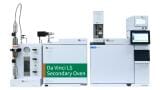
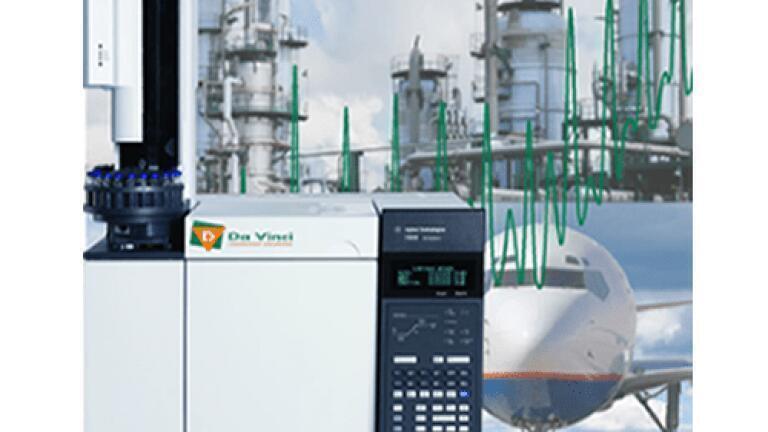
The analysers are based upon the Agilent 7890B Series GC as displayed in figure One. Each configuration is dedicated to the required test method for the hardware components; such as the sample inlet, the detector & the column, the calibration, reference or QC samples and software.
The Agilent 7890B Series GC is controlled by Agilent OpenLab ChemStation software. The DVLS analysers also include the PetroReporter software to automate the data processing and reporting for the various SimDist applications. After data processing PetroReporter creates the required SimDist reports. Thanks to the universal setup the analyst could also use PetroReporter to process and report data for DHA, FAME and Gas Calculation applications.
PetroReporter is successfully used by a global installed base of leading oil refineries to assist the analysts in reporting the following petrochemical properties:
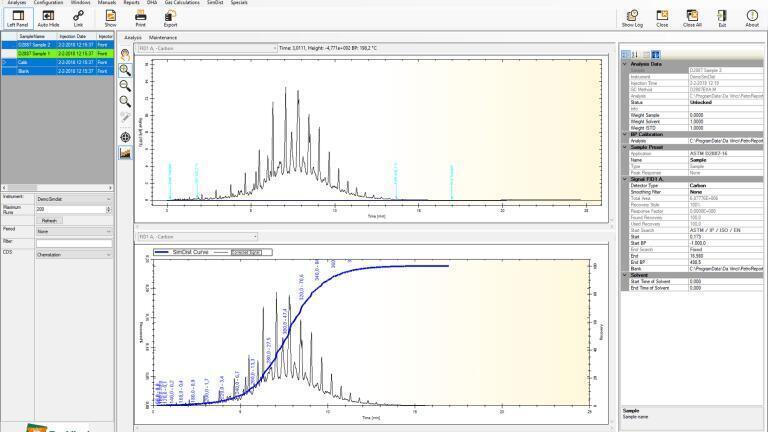
Figure Two displays the chromatogram of the ASTM D2887 Analysis of Light Diesel using PetroReporter
Reporting accurate SimDist data on the light hydrocarbons in crude oil is a challenge due to the quenching effects of the crude oil solvent. The solution is merging a capillary GC (DHA) analysis with the SimDist results as standardised in the test method D7900.
The first two minutes of the SimDist ASTM D7169/IP 545 analysis are used for the DHA ASTM D7900 analysis to identify the individual components up to n-Nonane. The SimDist-DHA merge point can be chosen at the common used n-Nonane elution time or different using the PetroReporter software. The merged report lists both the SimDist, DHA and combined recoveries.
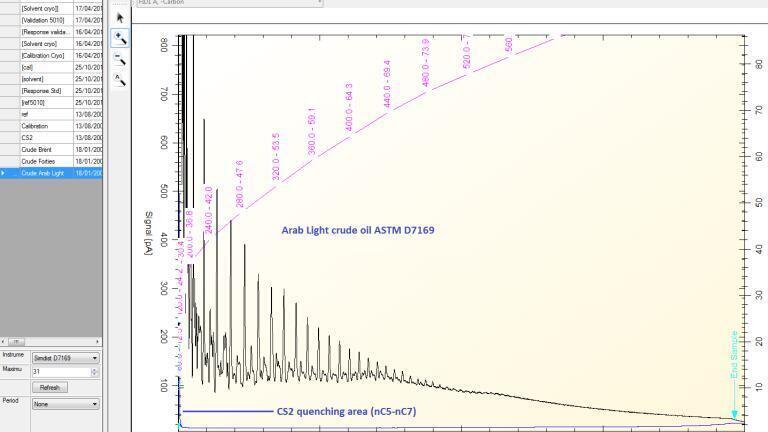
Figure Three displays the ASTM D7169—DHA D7900 Merge analysis of a light crude oil
Each analyser is tested according to the in-house testing procedures to check the system performance and to verify the analyser specification by a reference sample test. Factory Acceptance Test will be scheduled upon request.
For more information on the various SimDist applications download the application note, please click here.
PIN 27.4 Aug/Sept 2026




 Product directory


.jpg)










.jpg)

.jpg)

.jpg)

.jpg)