Analytical instrumentation
Published over 11 years ago. See the latest and most current information on Analytical instrumentation.
Anton Paar (Austria): ASTM D445 was originally approved 50 years ago, in 1965. Why the need for change?
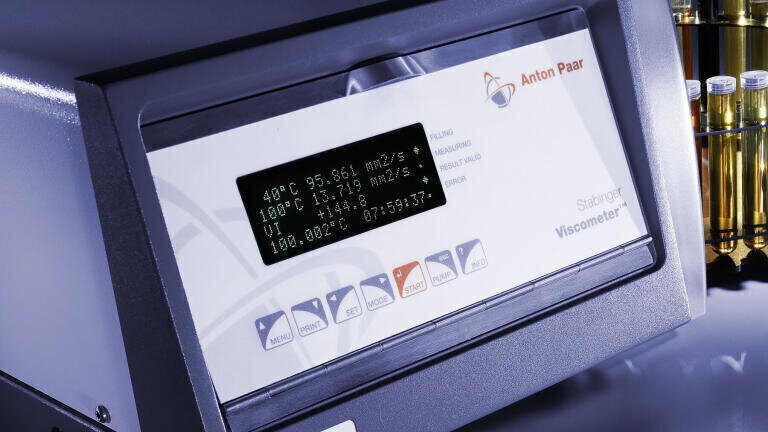
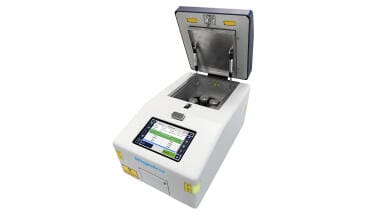
The Stabinger Viscometer SVM 3000 was first introduced in 2001 and standardised in D7042-04. It was created based on a completely new measuring principle (based on rotation), so that limitations of the manual glass capillary method - described in D445 - could be overcome. SVM 3000 simultaneously determines two parameters – both dynamic viscosity and density – and calculates kinematic viscosity.
What changed with the introduction of Stabinger Viscometer?
No thermal bath is required. Thermoelectric elements ensure a highly precise temperature control and very fast temperature changes without the need to change bath liquids, exchange thermometers, calibrate the bath circulation or teach sensors for different temperatures. While the built-in thermostat reaches temperatures down to 0 °C without external cooling, lower temperatures down to -56 °C can be reached with external circulation coolers.
With the Stabinger Viscometer there is no need to change capillaries for each viscosity range; instead, you use one single integrated cell. This allows measurement of different samples consecutively, even with quick temperature changes.
There is no need for the operator to be involved in timing, taking temperature readings, calculations with capillary constants and correction factors.
Instead of mimicking the manual procedure (as automated D445 viscometers do), the Stabinger Viscometer was designed to be an automatic instrument from the beginning. Where D445 takes a single run time per determination, Stabinger Viscometer takes thousands of data points, checking them for stability, resulting in a better determinability than D445. These data points are also used to optimise the thermal equilibration time for each individual determination, whereas D445 relies on long pre-defined soak times (30 min recommended).
PIN 27.4 Aug/Sept 2026


 Product directory


.jpg)









.jpg)

.jpg)



.jpg)

.jpg)
.jpg)

.jpg)