Safety
Published over 15 years ago. See the latest and most current information on Safety.
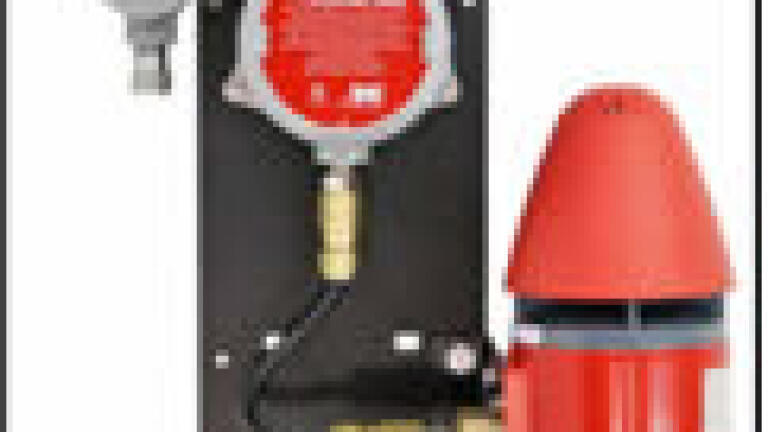
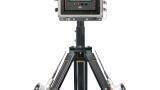
Detcon’s (USA) new SW-AV1-DV1 and SW-AV1-DV2 are wireless cordless audio visual alarm stations that can operate continuously in full alarm condition for up to 6 hours using standard SmartWireless™battery packs. The wireless alarm stations have two alarm levels with relay options that include adjustable set points and latching/non-latching relays. Alarm Level 1 activates the strobe and Alarm Level 2 initiates an audible warning device. Communication is performed using RXT-300 or RXT-320 SmartWireless™ transceivers. Alarm Level 2 can be configured for acknowledge/silence via operator interface at the SmartWireless™HMI display panel when communicating by way of the RXT-320 transceiver. The RXT-300 transceiver has integrated processing capabilities and does not require a stand-alone controller to activate alarms. Alarm levels are set in the transceiver using a wireless configuration tool.
Detcon-designed "smart" battery packs continuously report charge levels and estimated operating time before recharge or replacement is required. An optional solar charging panel can be used to extend operating time and maintain a full battery charge in virtually any application. SW-AV1-DV1 is rated Class I; Division 1, Groups C, D; and SW-AV1-DV2 is Class I; Division 2, Groups A, B, C, D.
PIN 27.4 Aug/Sept 2026



 Product directory


.jpg)
















.jpg)