
Fixed gas monitor
Published over 12 years ago. See the latest and most current information on Fixed gas monitor.
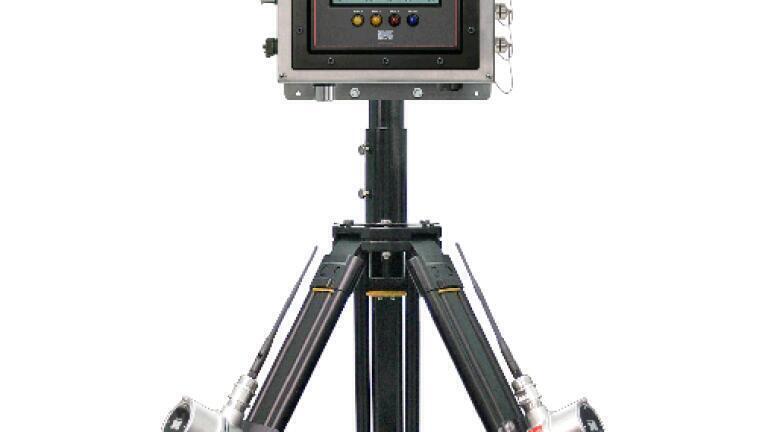
Detcon (USA), an IST company, is pleased to announce the Site Sentinel is fully certified to North American hazardous-area approval requirements. All models of the CXT (wireless) and CX (wired) combustible and toxic gas detectors are certified cCSAus Class I, Division 1, and both the CXT Controller and CX Sensor Station are certified cMETus Class I, Division2. Designed for fixed or transportable use in a wide range of applications, the flexible and field-expandable Site Sentinel can include up to 32 gas detectors and can be configured for any combination of wired and wireless devices.
Additional Site Sentinel components include wireless alarm stations and the new state-of-the-art Sentinel SiteWatch gateway to alert personnel of potential danger. The Sentinel SiteWatch provies advanced networking capability with email and text messaging on all fault and alarm events through Ethernet or Cellular communications. Web-page remote monitoring of the safety system is also available through Ethernet communications.
All wireless components of the Site Sentinel operate on a 2.4GHz frequency, have a two mile line-of-site communication capability, and use an innovative "Mesh Network" topology that allows each device to operate as a repeater within the network, ensuring redundant and reliable communication. The wireless system can also be armed with an extra measure of network protection when configured with Detcon's patent-pending "Fault Tolerant Safety Network." This technology allows any device in the network to operate as a master device if needed, thereby eliminating any single-point of failure.
Critical fault diagnostics are available locally or through a link to the other members of the network. Power options for system components include disposable batteries, rechargeable battery packs with solar power options, and line power.
PIN 27.4 Aug/Sept 2026



 Product directory















-EN-2.jpg)