Analytical instrumentation
Hydrogen sulphide (H₂S) remains an important analytical concern across the petroleum, gas and wastewater industries. The highly toxic and corrosive gas can present a significant occupational safety risk, while its presence in fuels, process streams and industrial waste can also contribute to corrosion, production problems and environmental concerns. Reliable measurement is therefore required not only to protect personnel, but also to help operators monitor processes and maintain the quality and integrity of equipment and products.
The challenge for laboratories and process operators is that H₂S can occur in a wide variety of sample matrices, each requiring an appropriate approach to extraction and measurement. In petroleum operations, for example, H₂S may need to be determined in crude oil, gasoline, diesel and marine fuels, while refineries and gas-processing facilities may also encounter the compound in LPG, natural gas, LNG and other gas mixtures. Analysis can also extend to water and wastewater, sludges, bitumen, tar and elemental or molten sulphur.
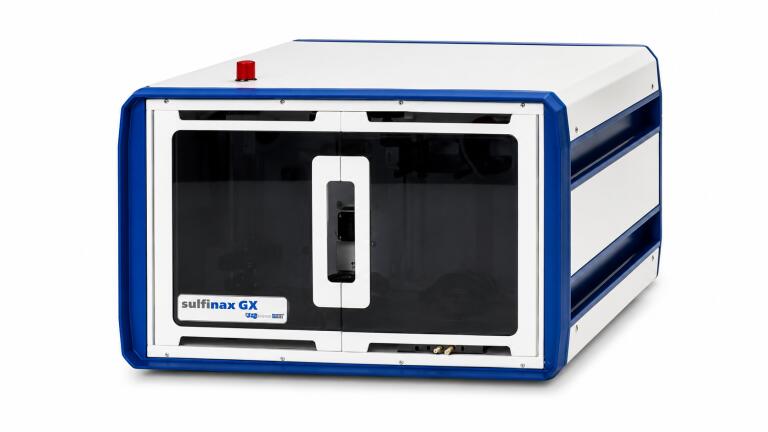
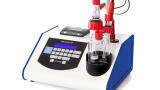
Electrochemical detection combined with gas extraction provides one approach to this wide range of applications. ECH Elektrochemie Halle’s Sulfimax GX has been developed as a total H₂S analyser capable of measuring concentrations from 0.01 ppm to 10,000 ppm across liquid, solid and gaseous samples. Depending on the sample and application, a typical analysis can be completed in around five minutes.
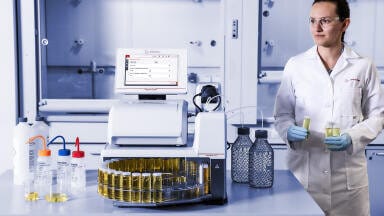
For petroleum and solid samples, H₂S is released using a headspace technique. The sample is placed in a sealed vial and introduced into a heated headspace module, where temperatures of up to 180°C can be used depending on the material. The released H₂S is subsequently transferred to the analyser for electrochemical detection. This approach allows H₂S to be measured without directly introducing the original sample into the detection system.
Selective extraction is particularly important when analysing petroleum products, where other sulphur-containing compounds can interfere with the measurement. The system uses white oil in a separate extraction chamber to remove mercaptan sulphur interference before detection. Following analysis, the H₂S is directed through an activated carbon filter, allowing the system to be operated without requiring a fume hood under the stated application conditions.
Water and wastewater require a different extraction approach. In accordance with DIN 38405-27, sulphide can be determined by gas extraction following acidification of the sample. Phosphoric acid is used to lower the pH, releasing H₂S from the sample so that it can be transferred to the electrochemical sensor. Once the measurement is complete, the extracted H₂S is again removed through activated carbon filtration.
The ability to use a common detection principle across such different matrices can be particularly useful where laboratories are responsible for multiple stages of fuel, gas or wastewater analysis. Rather than requiring separate analytical techniques for every sample type, an analyser platform capable of accommodating different extraction methods can provide greater flexibility while maintaining a consistent measurement principle.
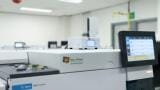
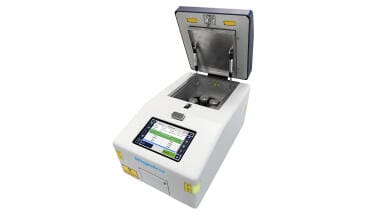
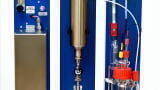
The Sulfimax GX is offered in laboratory, portable and online configurations. The laboratory version can be combined with headspace and automated sampling equipment, while the portable version is designed for measurements where analysis needs to be carried out closer to the process. Online configurations provide continuous H₂S monitoring in gas streams or aqueous applications, with an ATEX-certified version available for use in appropriate hazardous areas.
As refineries, fuel producers and other process industries continue to handle increasingly diverse feedstocks and products, the requirement for dependable H₂S measurement is unlikely to diminish. The analytical challenge is not simply detecting the compound, but doing so accurately across different concentrations and sample matrices while integrating measurement into laboratory, field and continuous process-monitoring environments. Analytical systems that can accommodate these different requirements therefore have an increasingly important role to play in H₂S monitoring and process control.
PIN 27.4 Aug/Sept 2026


 Product directory











.jpg)

.jpg)


.jpg)