Personal gas monitor
It is looking to integrate tens of thousands of wearable gas detectors into its workforce operations.
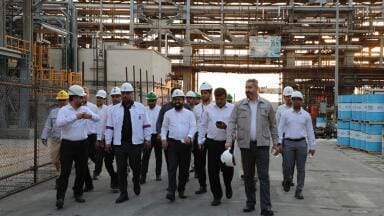
In 2025, ADNOC launched a multi-phase program to distribute over 28,000 connected safety devices across its onshore and offshore oil, gas, and petrochemical facilities.
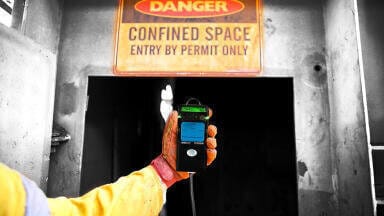
The initiative centres around the adoption of wearable gas detectors.
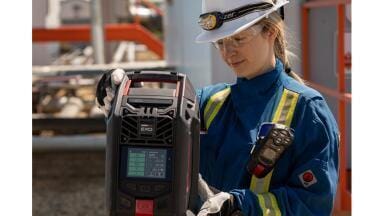
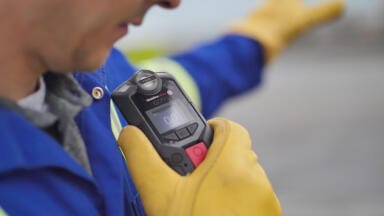
These compact, rugged personal monitoring devices are designed to detect toxic and flammable gases such as hydrogen sulphide (H2S), carbon monoxide (CO), and combustible hydrocarbons.
They are worn on each worker’s person and continuously sample the surrounding air, issuing immediate alerts in the event of gas exposure that exceeds safety thresholds.
Unlike traditional gas monitors that operate in isolation, the G6 units are networked through cellular and GPS connectivity.
This allows each device to transmit real-time data, including gas concentrations and worker location, to ADNOC’s centralised cloud-based safety management platform.
If a hazardous exposure occurs, a motionless worker is detected, or the SOS button is pressed, safety control teams are instantly notified with precise coordinates and gas readings.
To complement the wearable rollout, ADNOC has installed over 1,200 indoor location beacons across confined spaces, production units, and corridors.
These beacons enhance positioning accuracy where GPS may be limited, ensuring that workers inside structures or processing buildings remain visible to control room staff.
The full solution integrates seamlessly with ADNOC’s 24/7 safety command centres, allowing dispatch of emergency teams and triggering of site-specific response protocols in real time.
This rollout reflects ADNOC’s commitment to digital transformation and operational excellence through its ‘Oil & Gas 4.0’ agenda.
The connected gas detection system not only protects frontline personnel, but also generates compliance logs and audit trails automatically.
Device calibrations, bump tests, exposure history, and maintenance records are digitally recorded, streamlining reporting to internal and regulatory stakeholders.
The scope and ambition of the project are unmatched in the region.
The system covers workers in desert installations, offshore platforms, and major downstream complexes, each of which presents unique atmospheric challenges.
The G6’s long battery life (up to 18 months), robust casing (IP68-rated), and automated maintenance features make it well suited to ADNOC’s remote, high-demand environments.
ADNOC’s leadership has emphasized the broader implications of this program: a cultural and procedural shift from reactive hazard management to proactive, data-driven prevention.
Workers now carry a live safety link, not just a detector.
Supervisors and HSE professionals are empowered with continuous visibility, not just periodic reports.
Risk assessments can now be based on quantified, real-time exposure data, and interventions triggered before conditions escalate.
Preliminary results from the initial deployment phase have been positive.
ADNOC reports faster incident response times, improved gas event tracking and better compliance with safety procedures across the board.
Workers have also expressed greater confidence in emergency readiness and personal protection.
From a regional perspective, this initiative sets a new standard.
As GCC countries prioritize industrial safety and sustainability, ADNOC’s wearable technology program illustrates how a legacy oil and gas operator can adopt smart safety solutions at enterprise scale.
The project is being closely observed by peer companies and may influence technology adoption strategies across the Middle East.
As ADNOC continues to expand the program in 2025 and beyond, integration with broader operational systems, such as digital permit-to-work platforms, zone-based geofencing, and real-time evacuation modelling, is expected to further enhance its impact.
PIN 27.4 Aug/Sept 2026



 Product directory


.jpg)














.jpg)



.jpg)