Measurement and testing
Published over 15 years ago. See the latest and most current information on Measurement and testing.
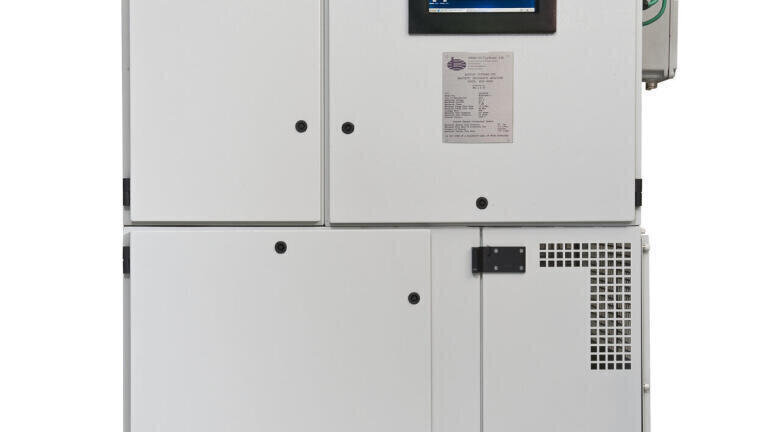
The MOD-8000 online process analyser supplied and manufactured by Modcon Systems (Israel) is designed to analyse the composition of process fluids. Using Magnetic Resonance (MR) spectroscopic techniques, it can detect the presence and the concentration of chemical constituents in a process stream. By utilising exclusive software, it provides closed loop supervisory control of a process unit. It has an extensive range of applications from light Naphtha streams to heavy Crude oil. Typical user benefits comprise increased throughput, better process control, timely detection of off-spec product, and lower operating costs.
Highlights of the New System includes; a new magnet design (enhanced long and short term stability; less sensitive to temperature).
State of the Art electronics offered (Smaller foot-print; Complete integrated PCB for Shim & Heater Control; Digital RF & Acquisition - improve SNR).
A new concept of Process Probe (An entire pipe go thorough without contact with the system; Much better temperature insulation; Higher Q i.e. better sensitivity).
New software (Includes new algorithm for standard and global Models; Fully automated process capacity; Extensive remote diagnostic capabilities)
PIN 27.5 Oct/Nov 26


 Product directory


.jpg)














.jpg)







.jpg)