Measurement and testing
Published over 13 years ago. See the latest and most current information on Measurement and testing.
Chemical plants and refineries receive or deliver many different liquid hydrocarbons, including Natural Gas Liquids (NGLs) which are transported via pipeline, railcar, tanker trucks and/or ship. Many of these products are very similar in properties and appearance. Therefore, proper identification and interface detection of these hydrocarbons at transport locations, handling multiple products, is important to ensure good quality assurance. Combining an interface detection device with automatic controls can minimise transmix of products, reduce waste, reduce the filling/ unloading times, decrease safety risks, reduce sampling and minimise operator errors.
Having operated globally for over 30 years, K-Patents (Finland), specialising in in-line liquid concentration measurement instruments for industrial users and OEMs in the chemical, oil and petrochemical, pulp and paper, food, semiconductor and pharmaceutical industries, can provide an instrument for accurate liquid hydrocarbon identification in transportation operation.
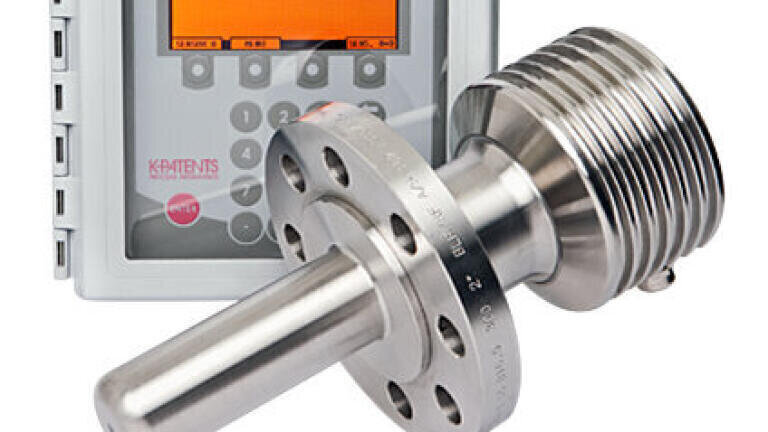
Based on the Refractive index technology K-Patents’ refractometer is a reliable instrument for identifying liquid hydrocarbon products since each hydrocarbon has a different and distinct refractive index. This refractive index is a property inherent to the hydrocarbon, and can be used to “fingerprint” the product for identification. This “fingerprint” can be applied to a scale to achieve the proper controls.
Two typical products that require proper interface detection are n-butane and iso-butane. These are the two structural isomers of butane meaning they have the same molecular formula but different arrangement of the chemical structural. Since they are isomers, the chemical properties of these products are very similar, in particular, the density. However, the difference in refractive index is wide enough to accurately and reliably distinguish between these two products. K-Patents can provide an accurate and repeatable refractive index measurement to +/-0.0002. Often, this refractive index number is applied to the Brix scale so that whole number values can be monitored.
K-Patents Process refractometer is typically installed in main supply line and the inlet of the product storage. This provides adequate timing for interface detection and double assurance of the hydrocarbon product being delivered to the right storage.
Due to the refractometer digital sensing technology small amounts of entrained air or gases will not affect the measurement. Normal wetted parts are stainless steel 316L with other options available on request. Appropriate hazardous and intrinsic safety approvals are available if required.
PIN 27.5 Oct/Nov 26


 Product directory


.jpg)













.jpg)




.jpg)