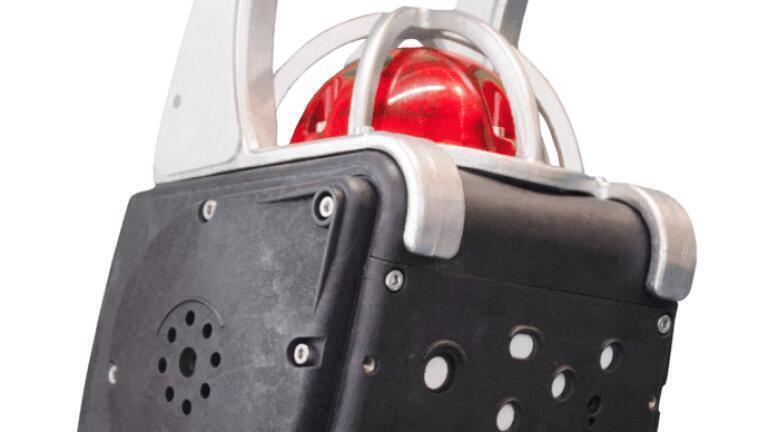
Gas detector
Published over 12 years ago. See the latest and most current information on Gas detector.
Oldham’s (France) versatile BM 25 multi-gas monitoring system is now available in a wireless version, offering greater flexibility for a wider range of applications.
The BM 25 detects up to 5 gases simultaneously and can include up to 30 devices in a standard network. Using a MESH network topology, the BM 25 Wireless connects peer-to-peer allowing each device in a network to receive, send, and relay data. Should a device fail or an obstruction occur, communication automatically re-routes allowing the network to remain in operation, or routes around line-of-sight obstacles, forming multiple networks when necessary. When the obstruction is removed communication quickly reverts back to one network.
Powered by a NiMH battery pack, the BM 25 Wireless offers up to 135 hours of continuous run time and is compatible with Detcon’s Model X-40 controller. Standard features include STEL and TWA values and a datalogging capacity of up-to four months. An intrinsically safe trickle charger is also available for long-term area monitoring in classified zones.
The robust BM 25 Wireless is fast and easy to deploy, provides versatility in coverage, and is highly fault tolerant. Approvals include ATEX, IECEx; CSA is pending.
PIN 27.5 Oct/Nov 26


 Product directory


.jpg)