Biofuel industry news
Published over 17 years ago. See the latest and most current information on Biofuel industry news.
The presence of copper in fuel ethanol blends negatively affects engine performance. Thus, the US ASTM D 4806 and the European EN 15376 both restrict the amount of copper in fuel ethanol to 10 µg/L. Anodic stripping voltammetry (ASV) is the determination method of choice, as it allows the quantification of Cu(II) without any sample pretreatment.
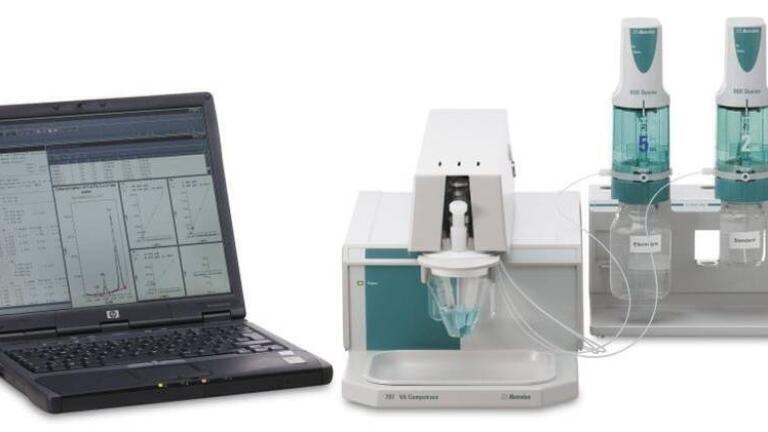
The presence of heavy metal traces in car fuels adversely affects engine performance. Copper, for example, is a very active catalyst for the low-temperature oxidation of hydrocarbons. Consequently, copper concentrations above 12 µg/kg in commercial gasoline are expected to promote the deterioration of olefins and the formation of gum. In order to monitor heavy metal traces, anodic stripping voltammetry (ASV) is the method of choice. ASV is a sensitive and selective electroanalytical technique comprising two steps. Firstly; metal ions are electrodeposited on the mercury electrode, which is held at a suitable potential. Then the (amalgamated) metal deposits are anodically stripped from the mercury electrode by scanning the potential. The ASV is performed using the hanging mercury drop electrode (HMDE) and the Metrohm’s (Switzerland) 797 VA Computrace for trace analysis. The HMDE is used with a platinum auxiliary electrode and an Ag/AgCI reference electrode using saturated lithium chloride in ethanol as the inner electrolyte. The concentration of the copper in the samples is quantified by standard addition.PIN 27.4 Aug/Sept 2026


 Product directory


.jpg)























.jpg)