Biofuel industry news
The knock-on effects are being felt across the oil and petrochemical value chain.
In July, the country achieved its target of blending 20% ethanol into petrol (E20), five years ahead of schedule.
Policymakers hail the move as a milestone in energy security and climate mitigation, but it has also raised fresh concerns about fuel performance, engine compatibility, and food security.
According to government figures, ethanol blending has cut 69.8 million tonnes of carbon dioxide emissions since 2014, while saving an estimated ₹1.36 trillion ($15.5 billion) in foreign exchange otherwise spent on crude imports.
The International Energy Agency ranks India as the world’s third-largest oil importer, and reducing that exposure is both an economic and strategic priority.
A study by the Council on Energy, Environment and Water (CEEW) forecasts that CO₂ emissions from road transport will nearly double by 2050 if fuel demand keeps rising unchecked.
The E20 milestone is therefore viewed in Delhi as essential to bending the emission curve.
For the automotive and fuel supply chain, however, E20 raises pressing technical challenges.
Ethanol has a lower energy density than petrol and is more corrosive to metals and polymers, potentially affecting seals, gaskets, and fuel lines.
Many vehicles sold in India over the past two decades were not built with E20 in mind.
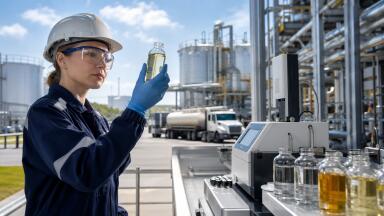
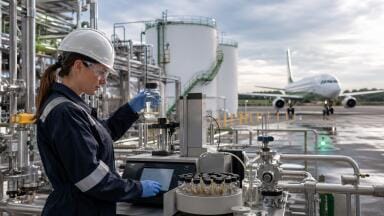
That creates new imperatives for process monitoring and quality assurance.
Fuel retailers and refiners must ensure consistent blending accuracy, while OEMs and service providers are developing retrofit kits and chemical treatments to mitigate corrosion risks.
Maruti Suzuki, India’s largest carmaker, is preparing an E20 material replacement kit, while Bajaj has recommended in-tank cleaners to reduce deposit build-up.
For instrumentation suppliers, the market for fuel quality sensors and blending control systems is expanding rapidly.
Ethanol’s hygroscopic nature also means storage and distribution systems require enhanced monitoring to avoid phase separation and microbial growth.
Consumer scepticism is another hurdle.
Many vehicle owners report mileage losses on social media, though official testing data remains sparse.
Insurance companies have complicated matters further: some standard policies exclude cover for damage caused by non-compliant fuel, leaving motorists exposed.
The Petroleum Ministry has dismissed many of these concerns as overstated, insisting that proper tuning and routine part replacement can offset E20’s drawbacks.
But without transparent, standardised monitoring data on performance and emissions, scepticism will linger.
Beyond the forecourt, ethanol supply raises thornier structural risks.
India required 10 billion litres of ethanol in 2025 to meet E20 blending, and demand is projected to reach 20 billion litres by 2050.
Much of this comes from sugarcane, a water-intensive crop, or from maize and rice diverted from food and feed markets.
Already, India has imported maize for the first time in decades, and the Food Corporation of India controversially allocated 5.2 million tonnes of rice—normally reserved for subsidised food schemes—to ethanol production.
Poultry farmers warn of rising feed costs, while food security experts argue that diverting staples in a country with 250 million hungry people risks long-term instability.
For refiners and petrochemical operators, the shift is double-edged.
On one hand, ethanol blending reduces dependence on imported oil and opens new opportunities for bioprocess monitoring and agricultural supply chain integration.
On the other, it introduces operational complexities: variable ethanol supply costs and increased demand for monitoring at every stage of the value chain.
Instrumentation users in blending facilities, fuel terminals, and vehicle testing labs will be on the front line of ensuring compliance with evolving standards.
As India eyes even higher blends—E25, E27 and E30—the role of reliable, high-resolution monitoring technology will only grow.
India’s E20 achievement demonstrates political will and rapid scaling capacity. But as one food policy analyst warned: “In a country like India, where millions still go hungry, we cannot use food to feed cars.”
For now, the success of India’s biofuel drive depends on three things: whether blending systems can maintain quality at scale, whether automotive compatibility issues can be addressed affordably, and whether the agricultural balance between food and fuel can be sustained.
PIN 27.4 Aug/Sept 2026


 Product directory















_Headquarters_-_7.jpg)
.jpg)













.jpg)