Analytical instrumentation
Published over 15 years ago. See the latest and most current information on Analytical instrumentation.
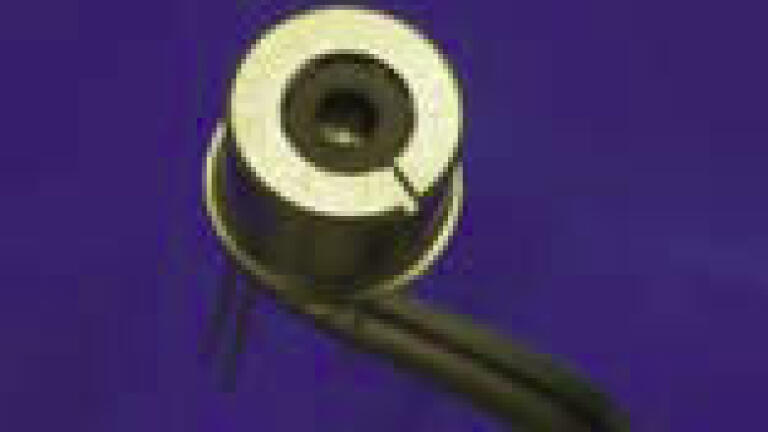
Vertilas GmbH (Germany) announces that the product line of laser diodes for sensing applications has now been extended with new wavelengths and packaging versions.
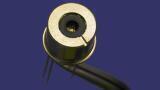
New products include lasers for 1280nm, 1550 nm to 1590 nm and 1680 nm. Vertilas now offers a comprehensive product range from 1.27 μm to over 2.3μm, enabling customers to build leading edge gas analysis equipment for a wide variety of gases, such as HF, H2O, HCl, CH4, NH3, CO, CO2 and more. All laser products are available in various packaging options, incl. TO-cans and fibre coupled optical sub-assemblies. These package types can be supplied with or without integrated thermo electric cooler (TEC) and thermistor.
Vertilas laser products are based on its unique Indium Phosphide (InP) Buried Tunnel Junction (BTJ) Vertical Cavity Surface Emitting (VCSEL) technology. This InP VCSEL technology allows a wider and faster tuning range than other available laser technologies. The circular beam shape of BTJ VCSELs enables an optimised optical system design. Furthermore, Vertilas’ BTJ VCSEL diodes feature high performance and very low power dissipation, making them ideal for both high end as well as compact and battery operated sensing equipment.
PIN 27.4 Aug/Sept 2026

 Product directory


.jpg)









.jpg)

.jpg)




.jpg)