Analytical instrumentation
Analysis of halogens in aromatic hydrocarbons is essential in the petrochemical and chemical industries. Even trace amounts of fluorine, chlorine, and sulphur can disrupt both upstream and downstream processes, leading to issues such as catalyst poisoning and/or equipment corrosion. From an environmental perspective, excessive halogen content in fuels can result in harmful emissions.
The ASTM D7359 standard provides a reliable method for determining total Fluorine, Chlorine, and Sulfur in aromatic hydrocarbons, covering concentrations from 0.10 to 10 mg/kg. The technique is based on oxidative pyrohydrolytic combustion, where halogens and sulphur compounds are converted into HF, HCl, and SO₂/SO₃, absorbed in an absorber solution, followed by analysis by Ion Chromatography (C-IC). This approach ensures sensitive and accurate results at trace level and higher concentration levels.
Traditionally, samples are introduced into the combustion furnace using a boat introduction system. While effective, this approach can be slow and less reproducible, especially at low concentrations. Direct liquid injection offers a modern alternative—eliminating intermediate steps, allowing larger sample volumes, and improving both sensitivity and throughput.
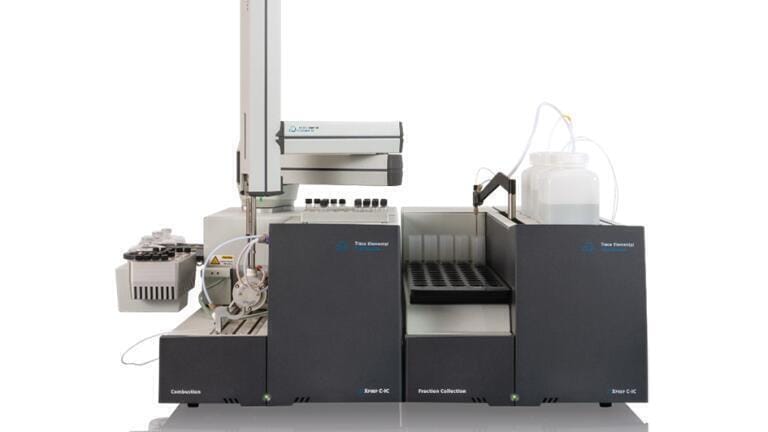
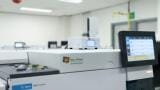
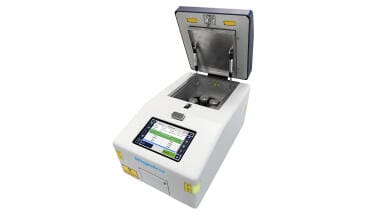
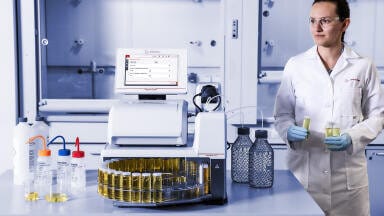
TE Instruments developed the Xprep C-IC, a compact, fully automated system for Combustion Ion Chromatography. It is the only configuration capable of handling both direct liquid injection and boat introduction in one analyser setup. This gives laboratories maximum flexibility in method selection.
Direct injection, supported by the Liquids Module and Vectra Autosampler, allows up to 250 µL of sample to be introduced at a controlled rate. This results in faster introduction, lower blank values, and a significantly improved performance for trace-level applications such as aromatic hydrocarbons and ultrapure chemicals. Calibration tests show superior linearity (R² > 0.999), lower detection limits, and better repeatability compared to conventional boat introduction methods.
Conclusion By combining ASTM D7359 with the Xprep C-IC, laboratories can achieve accurate, efficient, and fully automated analysis of Fluorine, Chlorine, and Sulphur in aromatic hydrocarbons. The analyser design enables flexibility and performance, ensuring reliable results for routine quality control and compliance testing.
PIN 27.4 Aug/Sept 2026


 Product directory


.jpg)









.jpg)

.jpg)



.jpg)