Analytical instrumentation
The International Maritime Organisation’s 2020 sulphur cap forced maritime operators to overhaul fuel blends and reconfigure monitoring regimes.
But while sulphur reduction dominates offshore compliance agendas, nothing similar has been brought forward for land.
However, this could be about to change.
National air quality regulators, particularly in Europe and North America, are signalling that low-sulphur requirements could be extended to other fuels.
For process engineers and emissions monitoring professionals, the question is, as always: are our instruments ready?
Sulphur dioxide (SO₂) and other sulphur oxides (SOx) are already regulated in point-source air permits across the petrochemical sector.
But compliance tends to be based on aggregate emission limits or periodic stack testing, not real-time fuel quality enforcement.
By contrast, the shipping industry’s shift to fuels with ≤0.50% sulphur (and 0.10% in ECAs) was explicitly driven by fuel formulation mandates,
These were verified by a combination of lab analysis and CEMS.
A greater proportion of land-based industry could soon face similar scrutiny.
The EU’s Industrial Emissions Directive (IED) revision now includes provisions that would empower authorities to tighten SOx controls on combustion installations.
In the US, the EPA is under pressure to revisit NSPS standards for industrial boilers, particularly in communities affected by SO₂ hotspots.
Meanwhile, air quality plans in cities like Houston and Rotterdam are beginning to link sulphur in fuels with local ambient exceedances.
A regulatory pivot from output-based SO₂ limits to input-based sulphur thresholds would transform monitoring practice.
Facilities would need to implement systems not just to measure stack emissions, but to characterise incoming fuels in order to enforce blending or substitution strategies in real time.
This change isn’t trivial. Many plants rely on supplier specifications or annual sampling to assess fuel quality.
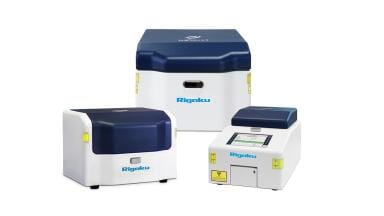
Portable XRF and lab-based UV fluorescence analysis dominate here but they’re neither continuous nor easily integrated into automated compliance regimes.
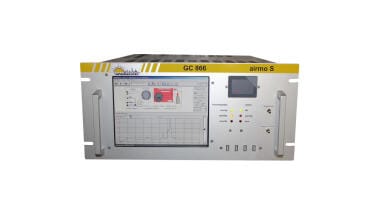
For real-time control, inline sulphur analysers, such as multi-wavelength UV spectrometers or TDLAS, would need to be adopted and validated.
There are a number of key instrumentation considerations of which users will need to be aware.
For instance, with targets potentially mirroring marine fuel standards (500 ppm), instruments must distinguish sub-0.05% sulphur levels across complex matrices.
Relatedly, recycled oils and LPGs require different measurement strategies. No single technique is universally applicable.
Firms need to integrate with process control. For example, sulphur data must inform fuel switching, dilution or combustion adjustment, requiring seamless connectivity with DCS/SCADA systems.
Another complexity is that sulphur mitigation can be tackled downstream via flue gas desulphurisation (FGD) or upstream, through fuel control.
Maritime sectors faced this choice and largely moved toward fuel substitution due to space and maintenance concerns.
Land-based operators, particularly those with ageing assets, may prefer to rely on scrubbers.
However, that doesn't negate the need for instrumentation.
FGD systems require robust CEMS for SO₂ validation, often using NDIR or pulsed fluorescence analysers, backed by isokinetic sampling for validation.
But regulators may demand dual-layer compliance: both fuel quality verification and post-combustion SOx tracking.
This raises CAPEX but opens a window for modular, integrated monitoring systems combining pre- and post-combustion analysis.
The maritime sulphur transition offers valuable lessons to users.
Looking back on the 2018–2021 rollout, we can observe a number of key trends in instrumentation and methods.
Portable XRF devices (e.g. ASTM D4294-compliant) became widespread for spot-checking fuel deliveries.
Onboard SO₂/CO₂ ratio analysers were deployed to assess scrubber efficiency.
Blockchain fuel tracing pilots (e.g. BunkerTrace) attempted to prevent adulteration or mislabelling – an idea gaining traction in land-based bunkering.
As land-based enforcement tightens, we can expect that refineries begin to offer certified low-sulphur blends for industrial clients.
Relatedly, we could see fuel-specific sulphur fingerprinting to track origin and composition.
Most obviously, there’s likely to be increased demand for cross-calibrated, dual-use sensors (fuel + flue gas).
Ultimately, sulphur regulation is a reminder that clean fuel is no longer a shipping-only issue.
As pressure mounts to reduce local air pollution and align industrial practice with decarbonisation targets, sulphur content is coming back into focus.
Instrumentation professionals should prepare for a rebalancing of monitoring from stack-top to tank farm.
PIN 27.4 Aug/Sept 2026

 Product directory


.jpg)











_Headquarters_-_7.jpg)
_Marine_Environment_Prot.jpg)

.jpg)


.jpg)