Analytical instrumentation
Published over 10 years ago. See the latest and most current information on Analytical instrumentation.
When a petroleum product is shipped and delivered, both supplier and customer check the specifications and compare the results. The measuring instruments used operate according to procedures defined in the product specifications. Only if both parties respect the test procedure and calibration conditions,can results be compared.
The precision and traceability of your test can only be fully guaranteed when the performance of the analysers is checked regularly according to international standards. Your flash point analyser, atmospheric distillation or cloud point tester operates according to its specific testing method (e.g. ASTM, EN, ISO), or at least you hope it does. Unless its performances are checked according to a recognised verification standard, there is no certainty the specified test method has been respected.
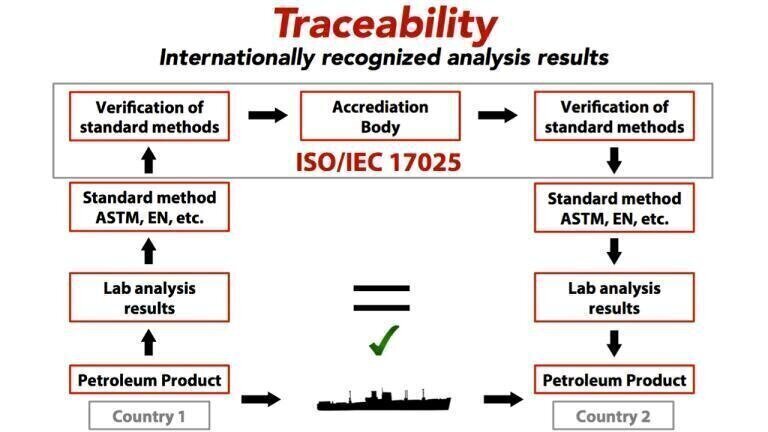
The diagramme describes a complete reliable traceability case. When the product has been tested in one lab and rechecked by a second laboratory, the results should be within the reproducibility of the test method or better. This is only possible when both labs use the same test procedures. This seems obvious, but with the use of automated instruments we rely on their construction, software, etc. to perform according to the chosen method. Are you sure you can?
ISO17025 verification assures you that the instrument performs within the limits of the working method. It also offers you traceability to internationally recognised standards.
It gives you confidence that your results are correct.
With the guaranteed traceability of your analysis, all discussions, rechecks, extra audits, time losses and product losses are avoided. When the product left your facility, its quality and safety was checked according to international standards.
ELS, European Lab Services (Belgium) is still the only company worldwide performing on-site performance evaluation of petroleum analysers according ISO/IEC 17025.
PIN 27.4 Aug/Sept 2026


 Product directory


.jpg)









.jpg)

.jpg)