Analytical instrumentation
Published over 12 years ago. See the latest and most current information on Analytical instrumentation.
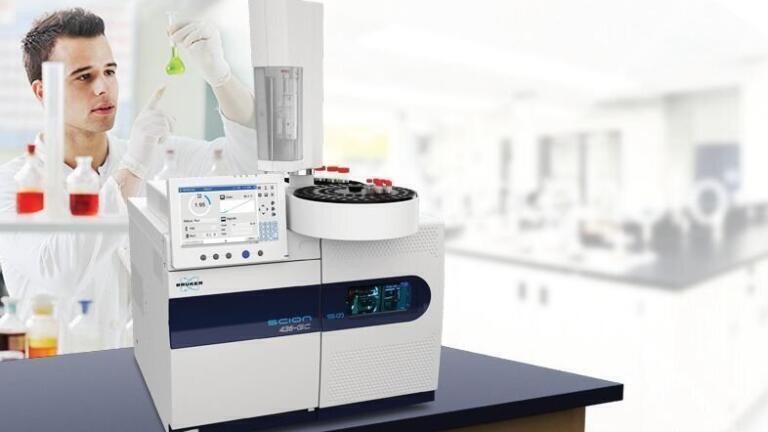
ASTM D5769 [1] is a method used commonly in refineries to quantify volatile organic compounds in gasoline. This can be problematic for GC/MS systems, because the analysis involves a wide range of volatile components at very high concentrations. The detector can easily become saturated and non-linear curves result. The SCION GC-MS from Bruker (USA) uses Extended Dynamic Range (EDR), a patented detection technology, which senses the level of the ion signal every scan and then adjusts the detector voltage and the perceived gain in order to keep the signal output at the optimum level for detection. This results in meeting the method linear calibration criteria without operator intervention or changes to the method procedure. This makes method development easier for methods such as ASTM D5769 that require a wide dynamic range for volatile organics in gasoline. The SCION maintains good linearity and mass spectral quality at the highest concentration standard.
PIN 27.4 Aug/Sept 2026


 Product directory


.jpg)











.jpg)
.jpg)