Analytical instrumentation
Published over 12 years ago. See the latest and most current information on Analytical instrumentation.
Crude oil is one of the most complex mixtures known; containing tens of thousands of different compounds, and its analysis on the molecular level by mass spectrometry is very challenging. Ultrahigh resolving power is needed for mass separation and extremely high mass accuracy is necessary for unambiguous molecular formula calculation. The reduction of the chemical diversity by chromatographic methods is one approach to gain more information on these complex samples. Besides the typically used methods, gas chromatography (GC) and liquid chromatography (LC), thin layer chromatography (TLC) can be used to separate heavy crude oil into fractions which can then be analysed by mass spectrometry using various ionisation methods.
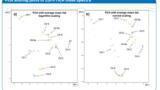
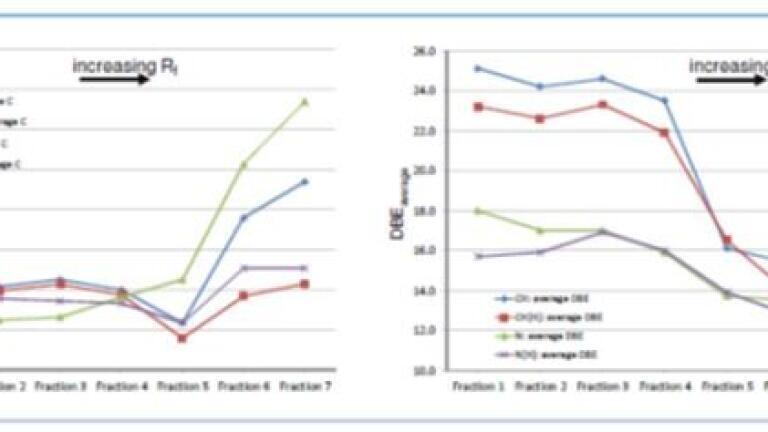
Bruker has reported the analysis of a standard crude oil from the North Sea that was fractionated by TLC and characterised by Fourier Transform Ion Cyclotron Resonance Mass Spectrometry (FT-ICR MS) using Laser Desorption/Ionisation (LDI). The fractions were analysed in detail concerning trends in average carbon, double bond equivalents (DBE), change of detected compound classes and ratio of detected radial cations and protonated species. This note shows how rapid analysis can be achieved with low effort and minimal sample prep for profiling fouling and corrosive agents in crudes to compliment GC analysis of the volatile space.
PIN 27.4 Aug/Sept 2026


 Product directory


.jpg)











.jpg)
.jpg)