_picture_2018.11.14.jpg)
Sulphur analysis
Published over 5 years ago. See the latest and most current information on Sulphur analysis.
Energy dispersive X-ray fluorescence (EDXRF) is a well-established analytical technique used in the petroleum industry. This technology is ideal for routine screening needs and certifying products quicker and easier. In general, EDXRF instruments are easy to use and offer a low cost of ownership.
From the quantification of heavy elements in crude oil to sulfur in fuels to a variety of elements in lubricating oils, EDXRF spectrometers provide quick, elemental analysis in a wide range of matrices.
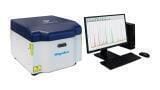
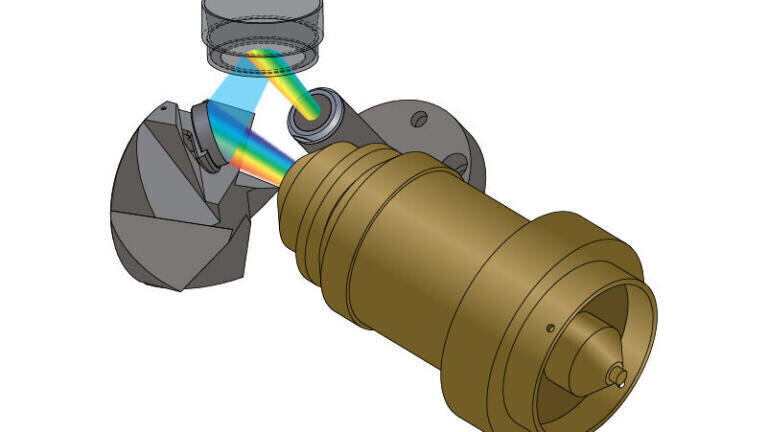
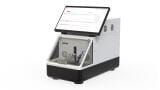
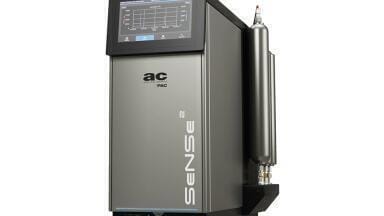
For applications that require the analysis of ultra-low and trace element concentrations, Rigaku offers the NEX CG indirect excitation EDXRF analyser. Unlike conventional EDXRF analysers using direct excitation geometry, indirect excitation eliminates background noise and provides lower limits of detection. Additionally, the NEX CG uses a unique close-coupled Cartesian Geometry (CG) optical kernel that dramatically increases the signal-to-noise ratio. This results in exceptionally low detection limits and a spectrometer capable of rapid trace element analysis, even in the most challenging sample types.
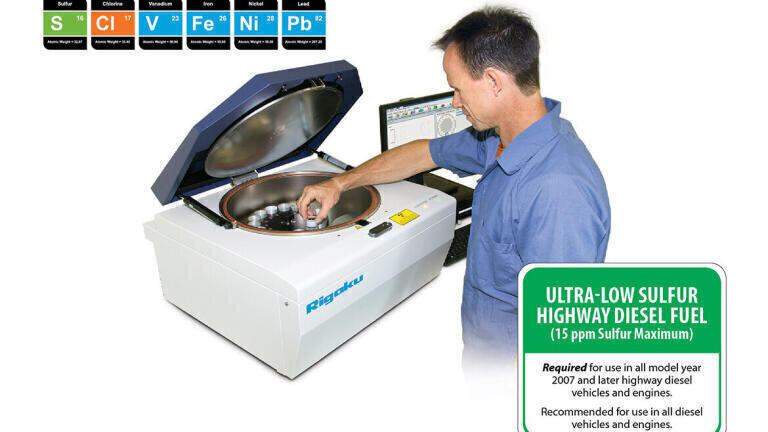
NEX CG easily meets ASTM and international compliance for ultra-low sulphur applications, such as testing ultra-low sulfur in diesel (ULSD) and meeting Tier 3 gasoline requirements. NEX CG delivers the lowest chlorine detection limits for ASTM D4929 compliance using Part C methodology and easily meets ASTM D5059 Parts A and C using the Bi internal standard method to measure lead in gasoline samples.
NEX CG is an all-in-one analyser that offers excellent versatility. Non-destructively analyse for sodium through uranium, and measure most elements from parts-per-million (ppm) levels to wt% in almost any matrix.
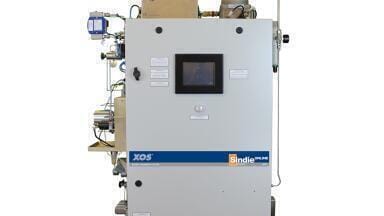
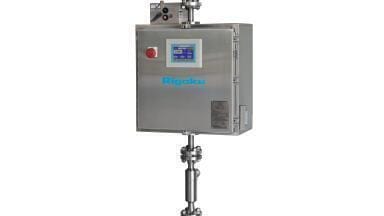
Applied Rigaku Technologies, Inc. offers a full line of benchtop and process EDXRF instruments for petroleum analysis applications. Rigaku EDXRF products serve many screening and monitoring needs and meet compliance for multiple testing methods and standards. For more information, contact us by email.
PIN 27.4 Aug/Sept 2026






 Product directory













.jpg)