
Sulphur analysis
Published over 8 years ago. See the latest and most current information on Sulphur analysis.
In current volatile markets with diversifying qualities of crude sources and qualities, early crude assessment data is pivotal in decision-making. Doing so however, can be costly and time-consuming. Methods such as combustion UV-fluorescence and X-ray are widely used techniques for quantification of Sulphur and Nitrogen in crude. However, none of these provide boiling point specific distributions for these hetero-atoms. This creates the need to assay the crude first, and run multiple samples through the lab for measuring these key value differentiators.
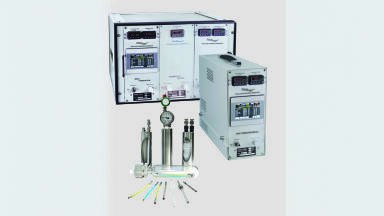
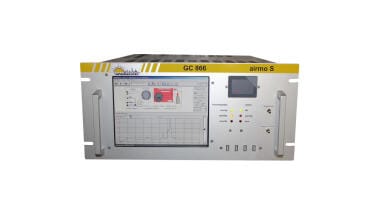
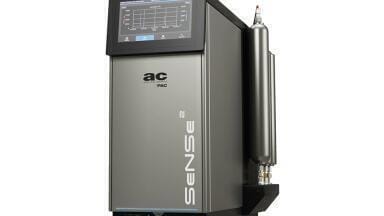
A few years ago, a new technique was developed in PAC to address this challenge: we named it CNS SIMDIS. Adding specific SCD and NCD detectors to a HT SIMDIS provides and analyser that generates complete hydrocarbon, sulfur and nitrogen boiling point distribution data in less than 30 minutes, without any sample preparation.
Obviously CNS SIMDIS Data far superior distillation efficiency than the standard 15 plates in D2892, and thanks to the specific software it is extremely powerful in reporting. It reports Total Sulphur, Total Nitrogen, %recovery, TBP boiling point plots, %OFF reports for Carbon, Sulphur and Nitrogen, and various other typical SIMDIS correlations and parameters. For crudes with very light ends, a DHA- front end may be added as per ASTM D7900, for even better accuracy and precision.
Different studies have proven CNS data to compare very well with conventional techniques such as UV-F or X-ray for Sulphur and Nitrogen. The method has been in use in various refining labs, and the first reference method for Sulphur SIMDIS has already been published (D7807).
CNS SIMDIS combines the typical robustness and precision associated with Gas Chromatography with specific detection, and the ability to simulate boiling point over a very wide range. It delivers unique and actionable data addressing some of our most critical challenges fast and very early in the process, and therefore should be considered an essential tool in the refining process and refining R&D labs.
PIN 27.4 Aug/Sept 2026


 Product directory














.jpg)



.jpg)
.jpg)
