Sulphur analysis
Published over 13 years ago. See the latest and most current information on Sulphur analysis.
Fast and cost-effective sulphur determination is an important task of process optimisation and quality control in refineries. Even very low sulphur contaminations can poison the catalyst and thereby affect its effectiveness. To avoid troubles feed stocks, process streams, and final products must be monitored precisely. The most reliable method to do so is the thermal decomposition of samples followed by UV-fluorescence detection of the formed SO2 (e.g. ASTM D 7183, D 5453 or DIN 20846).
Dependent on the process step, the sulphur contents can vary in a broad range from a few ppb up to high ppm. With common analysers the achievement of reliable results takes more or less time and effort dependent on TS content. Especially for ultra-traces and very high sulphur quantities, the process time is remarkably extended.
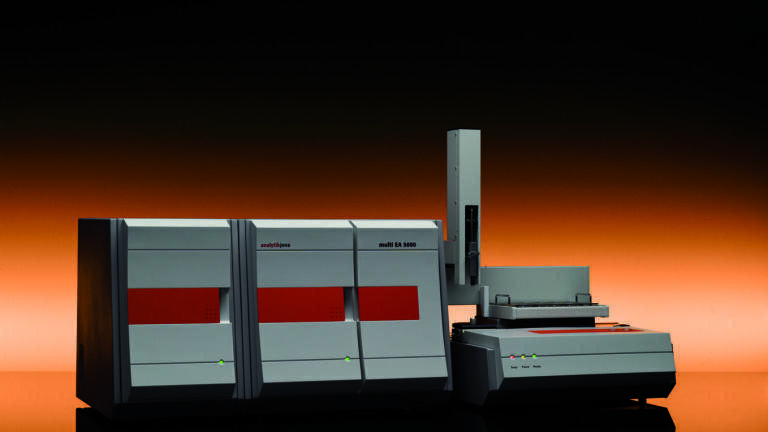
The multi EA® 5000 from Analytik Jena (Germany) with novel HiPerSens detector makes this job faster. The HiPerSens combines highest sensitivity with an impressively broad linear operation range. This enables fast and correct sulphur analysis independent of the concentration. Time consuming sample treatment (dilution) or enrichment steps (trap and release) are redundant.
PIN 27.4 Aug/Sept 2026



 Product directory


.jpg)









.jpg)