Safety
Published over 13 years ago. See the latest and most current information on Safety.
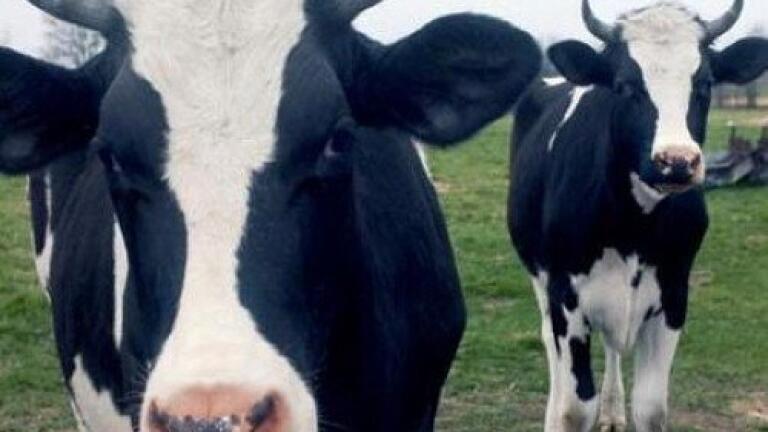
The University of Aberdeen is now leading a study that aims to reduce the amount of methane emissions from cows. The university is heading the £6.5 million project in a bid to reduce emissions of the greenhouse gas that is more damaging to the atmosphere than carbon dioxide.
One of the methods being explored by the international team of scientists is the possibility of selective breeding. Some preliminary findings of the study - which will be ongoing for four years - have suggested that cows' genes could be manipulated through breeding so as to reduce the amount of methane they produce.
Methane forms in the gut of ruminant animals - like cows - and is then released into the atmosphere when the animal belches. Methane is 25 times more detrimental to the atmosphere than carbon dioxide. Working to reduce emissions created by cows could massively reduce the effects of global warming.
Professor John Wallace, from the University of Aberdeen's Rowett Institute of Nutrition and Health, said: "Methane production represents a waste of feed energy, varying between two and ten per cent of total energy consumed by an animal. Methane production is important for cattle and sheep farmers because if the amount of methane produced can be lowered, then there are benefits for the environment, production and profitability."
As well as looking into selective breeding, the EU-funded RuminOmics project has also been investigating feed efficiency and the effects that different feeds have on the cows' methane production. The feed effects are being looked at between individual animals and it has already been ascertained that dairy cattle have a variable methane production.
Professor Wallace said: "Our work suggests there is considerable variability between individuals, with some producing more than others. The finding has led the team to ask whether animals which are low emitters always emit low levels under all circumstances."
The study could ultimately drastically reduce emissions around the world and help to reduce the effects of global warming.
PIN 27.4 Aug/Sept 2026


 Product directory


.jpg)












.jpg)