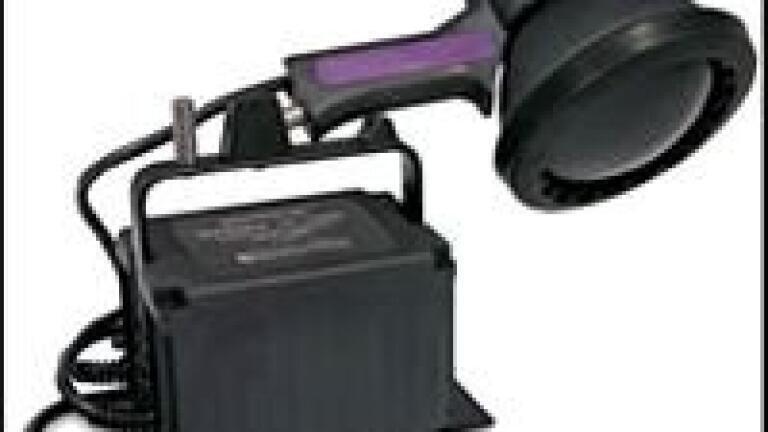
Spectronics Corporation (USA) has developed a state-of-the-art Micro Discharge Light (MDL) ultraviolet lamp that enables plant maintenance technicians to quickly and accurately identify even the tiniest refrigerant and industrial fluid leaks. The ultra-powerful Maxima™ ML-3500 Series lamps deliver unprecedented power—up to 10 times the UV-A
output of conventional High Intensity Discharge (HID) lamps.
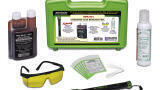
The high-performance Maximaâ„¢ ML-3500S can be used with fluorescent dyes to detect leaks in lubrication (gasoline/diesel), fuel (gasoline/diesel), ATF, power steering, coolant, hydraulic and air conditioning/refrigeration systems.
It has an inspection range of up to 30 feet and functions efficiently even in direct sunlight!
Also available is the ML-3500RS which is connected to a fully retractable, self-ratcheting flying reel with a 35-foot cord, perfect for assembly line inspections.
The ML-3500FL is a flood lamp for wider beam inspection.
All three models are available in 120V, 230V, 240V and 100V versions.
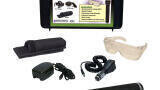
Also available is a battery-operated unit, which includes a 12-volt, 7-amp/hr rechargeable battery that will operate the lamp for 2 full hours.


 Product directory


.jpg)








.jpg)

.jpg)