Measurement and testing
Published over 14 years ago. See the latest and most current information on Measurement and testing.
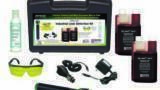
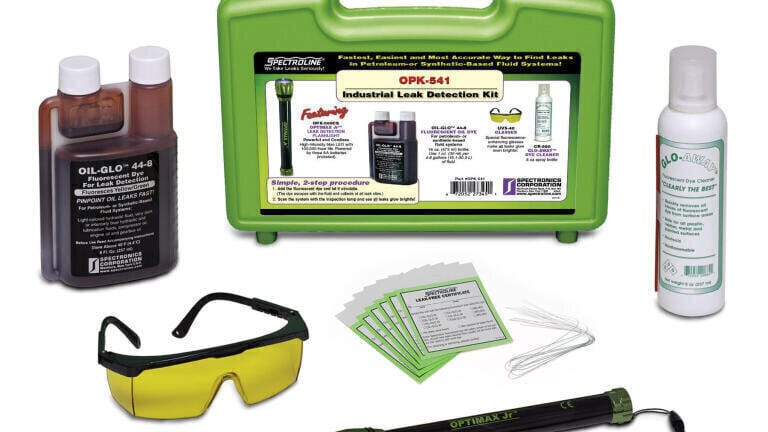
Spectronics Corporation (USA) has introduced the OPK-541 Industrial Leak Detection Kit, a new starter kit designed to effectively pinpoint the exact source of all leaks in hydraulic equipment, compressors, engines, gearboxes, fuel and other synthetic and petroleum-based fluid systems.
The kit features the OPTIMAX Jr blue light LED flashlight, a compact, high-intensity unit that quickly reveals all leaks in small to medium-sized industrial systems — even in cramped areas that are inaccessible to larger lamps. It measures just 7¼ inches (19 cm) long and weighs only 5 ounces (140 g).
Also included is an 8 oz (237 ml) twin-neck bottle of patented OIL-GLO 44 concentrated fluorescent oil dye, which is compatible with all synthetic and petroleum-based fluids. When a leaking system is scanned with the OPTIMAX Jr flashlight, the dye glows a bright yellow/green at all leak sources to reveal the precise location of each and every leak.
Rounding out the kit is an 8 oz (237 ml) spray bottle of GLO-AWAY dye cleaner, dye treatment tags, and fluorescence-enhancing glasses. All components are packed in a rugged carrying case.
PIN 27.4 Aug/Sept 2026




 Product directory















.jpg)