Measurement and testing
Published over 16 years ago. See the latest and most current information on Measurement and testing.
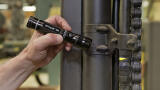
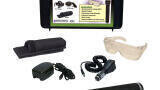
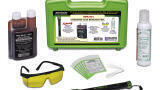
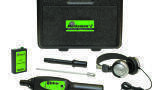
Spectronics Corporation (USA) has introduced the Cobra™ and Cobra-Plus™, part of the Cobra™ series of multi-purpose borescopes. Both scopes feature a built-in UV LED and white light LED. It enables industrial
technicians to accurately detect refrigerant and fluid leaks, uncover cracks in heat exchangers, conduct boiler and ductwork inspections, diagnose evaporator coils and much more!
The UV LED is ideal for finding refrigerant leaks, fluid leaks and surface flaws, while the white light is perfect for general inspection.
The CB-1000 Cobra™ has a 10mm, 24” shaft, while the CB-1036 Cobra-Plus™ has a 10mm, 36” shaft for inspections requiring additional reach.
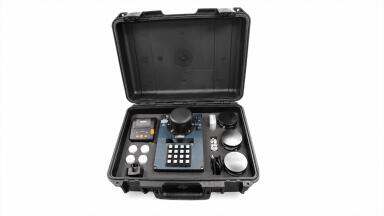
Included with both scopes is a clip-on mirror, which provides the added capability to detect flaws normally hidden from view. The borescope features advanced 7400 pixel imaging bundle and an adjustable-focus eyepiece for crystal-clear viewing. Four “AA” alkaline batteries (included) power the two service-free, integrated solid-state LEDs. Fluorescence-enhancing glasses for use with UV light and fluorescent leak detection dyes are also included. Dyes are sold separately. All components are packed in a sturdy plastic carrying case with foam insert.
PIN 27.4 Aug/Sept 2026


 Product directory



.jpg)









.jpg)