Measurement and testing
Published over 15 years ago. See the latest and most current information on Measurement and testing.
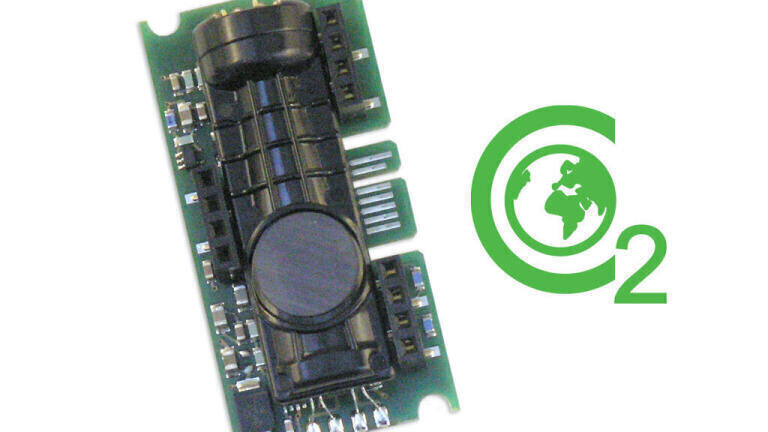
With its unparalleled low power consumption the new EE891 from E+E Elektronik is a highly impressive CO2 sensor module. Features such as an adjustable measuring interval enable optimum adaptation to specific applications while maintaining an average current consumption of less than 60μA.
This makes the EE891 CO2 sensor module the ideal battery-operated, energy-saving device.
The CO2 sensor module was specially developed for OEM applications and high-volume production.
The digital interface and extremely compact design facilitate clear-cut integration in mobile and energy-sensitive applications such as data loggers or demand controlled ventilation.
The CO2 load cell is based on infrared technology (NDIR) and, thanks to the patented E+E autocalibration process, it is completely maintenance-free. Ageing effects are compensated automatically to guarantee outstanding long-term stability.
The exceptional measuring accuracy and the large measuring range of up to 10,000 ppm make the EE891 the ideal tool for universal and flexible applications. E+E also provides corresponding Application Notes to enable easy integration of the CO2 sensor module in specific customer applications.
PIN 27.5 Oct/Nov 26


 Product directory


.jpg)













.jpg)



.jpg)