Fuel analysis
Published over 12 years ago. See the latest and most current information on Fuel analysis.
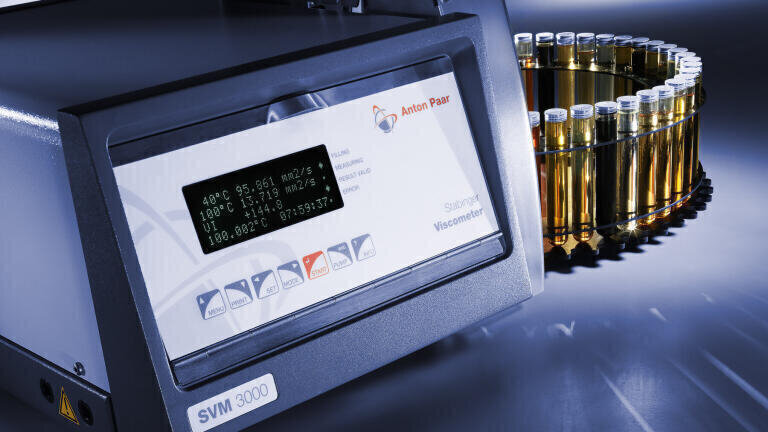
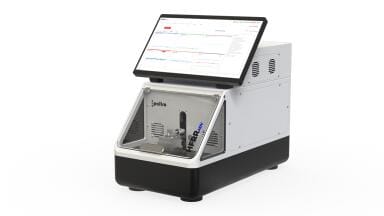
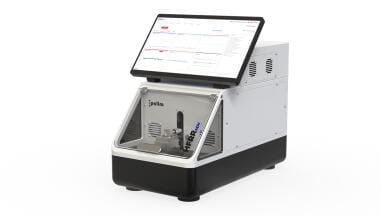
In December 2013, ASTM welcomed a new form of viscosity testing into the diesel fuel specifications. ASTM members voted to accept D7042 as a new viscosity method for testing diesel fuel according to the ASTM specifications D975. The updated standard ASTM D975-14 was finally published in March 2014. The SVM 3000 viscometer by Anton Paar (Austria) is the only instrument which performs this newly accepted D7042 testing method.
The positive benefits of ASTM D7042: no glassware, no water bath, and a 3.5 mL sample volume. Peltier elements heat and cool the small sample while the Stabinger viscometer performs frictionless viscosity measurements considered statically equivalent to ASTM D445.
In most cases measurements are performed at 40 °C but for special winter grades lower temperatures like -20 °C are requested. In this case SVM 3000 can also easily be used with only little additional counter cooling down to -56 °C.
The D7042 viscosity testing method revolutionises the way diesel fuels are tested.
PIN 27.4 Aug/Sept 2026

 Product directory


.jpg)










.jpg)