Flash point
Published over 12 years ago. See the latest and most current information on Flash point.
The need to heat and ignite potentially flammable liquids to test their flash point is a major safety issue for the petroleum and many other industries. Strict safety regulations in laboratories have created the need for safer flashpoint testing procedures which has long been a challenge to instrument manufacturers.
Today’s Good Laboratory Practice (GLP) requires laboratory technicians to follow stringent operating procedures and the most common equipment-related hazards in laboratories come from devices that include those powered by electricity for use at high temperatures. It is generally accepted that fail-safe devices such as temperature ‘cut-outs’ may not always prevent a sample under test from generating smoke and continuing to burn, this is a real potential hazard especially if the test apparatus is left unattended.
Technical committees and Manufacturers have acknowledged this problem and a revision is being considered at ASTM to mandate the inclusion of fire extinguishing systems within flash point testing apparatus. This revision is for safety purposes and to minimise risks where the sample catches fire in an automatic instrument due to sample mislabelling, operator error or during testing of an ‘unknown’ sample. In these instances a fire can cause consequential accidents, peripheral damage as well as damage to the instrument itself.
Stanhope-Seta (UK) have investigated ways to further reduce this hazard and following careful study of user requirements and several years of development have recently introduced
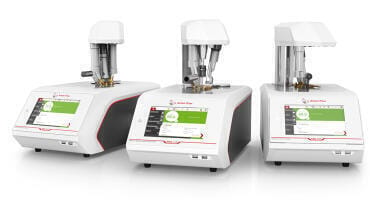
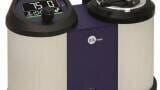
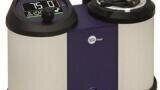
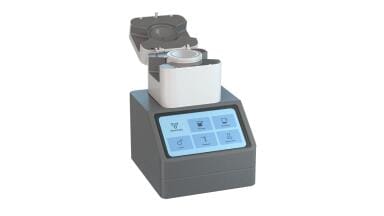
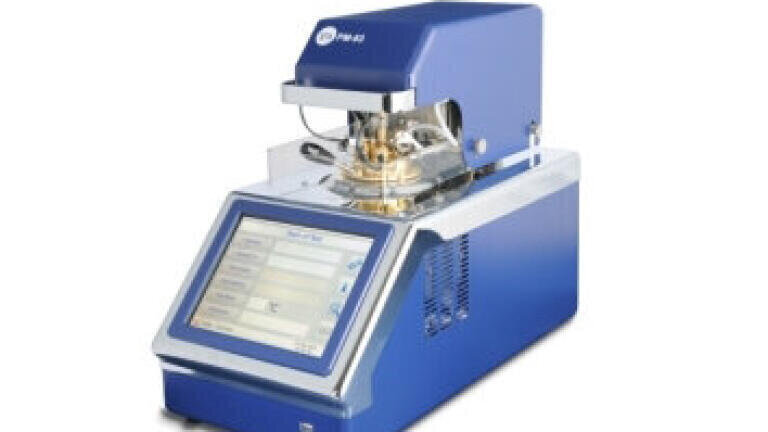
SETA PM-93, a new advanced automatic Pensky-Martens flashpoint testing which fully complies with latest safety criteria .
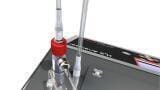
The PM-93 instrument incorporates a unique ‘SAFEFLASH’ safety system which, separately from temperature sensors which are used to monitor the sample and control instrument performance, will automatically and immediately activate an integral extinguisher in the event of flame or fire being detected around the test cup.
The new instrument also includes the latest safety changes to ASTM D93 test method including an automated pre-ignitor dip to check for the presence of excess volatile components, and an ignitor dip every 10°C to provide further safeguards.
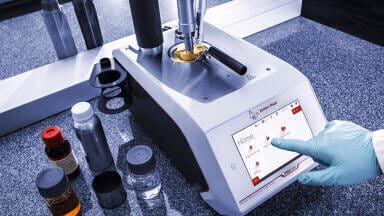
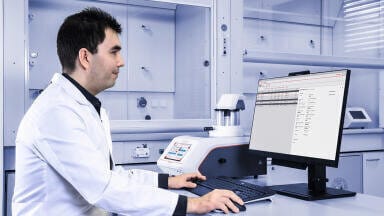
PM-93 allows rapid testing of samples in exact conformity to ASTM D93 (Pensky-Martens) and equivalent flash point test methods. It incorporates a large touch screen display with easy to use ‘3-step to test’ commands and LIMS compatible software.
The instrument has a very small footprint and is extremely rugged making it ideal both for fixed and portable testing requirements. Suitable for testing a very wide range of sample materials including refined fuels, crude oil, FAME, lubricants, liquid waste and many more. It provides very rapid sample testing using advanced heating control and forced air cooling systems
Sample handling is straightforward, the required volume is placed in the test cup and the upper test assembly, which houses all the ignition, stirring and detector modules is lowered into position. No need to fit any test accessories, everything is self contained in the unit.
In the event that the ‘SAFEFLASH’ safety system is activated and the extinguisher discharged it is easily and quickly re-activated by replacement of the charge canister.
PIN 27.4 Aug/Sept 2026



 Product directory


.jpg)










.jpg)
.jpg)