Analytical instrumentation
Published over 7 years ago. See the latest and most current information on Analytical instrumentation.
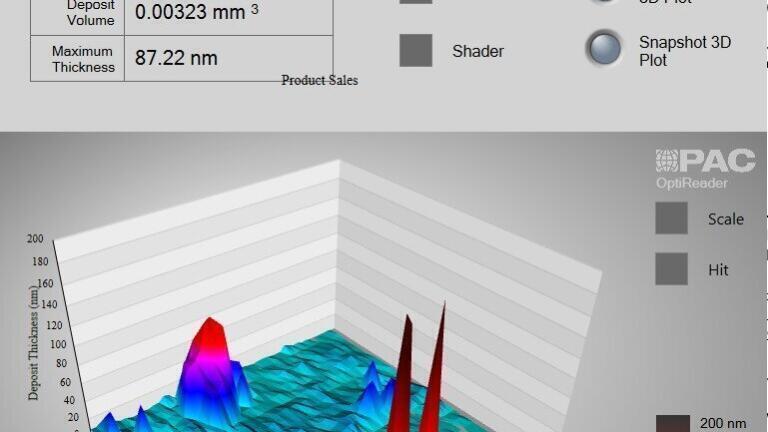
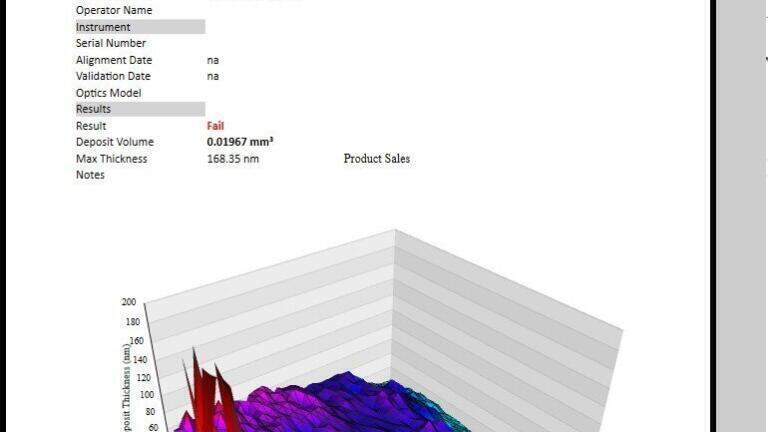
OptiReader, PAC's ellipsometric jet fuel thermal oxidation heater tube scanner now offers an interactive 3D report. This exciting new feature presents the results as a data map which can be rotated and re-scaled. The heater tube’s deposit thickness and distribution are shown in a highly detailed report that can be displayed as a surface, scatter plot, wire frame or with shades.
Another feature of the new release is the ability to perform a “hit test” where the user can select specific points on the heater tube and display the exact numerical thickness values.
The 3D plot report format, including a numerical tabulation of all points, can be printed or saved to a USB drive.
OptiReader provides pass/fail results with a full 2D and 3D thickness map defining maximum deposit thickness and volume in less than 10 minutes. Results are not only fast, but also highly precise and accurate. The user interface is so simple it doesn't require any training which saves time and money.
The multi-wavelength ellipsometer’s accurate and fast results, and data integration capabilities make it the best heater tube tester in its class.
OptiReader is the only ETR commercially available and listed in ASTM D3241-18 Annex A4.
PIN 27.4 Aug/Sept 2026


 Product directory


.jpg)










.jpg)

.jpg)