Analytical instrumentation
Published over 17 years ago. See the latest and most current information on Analytical instrumentation.
Metrohm presents a fully automated titrimetric method for the determination of the hydroxyl number according to ASTM E 1899-08 and DIN 53240-2. The hydroxyl number is defined as the mg of KOH equivalent to the hydroxyl
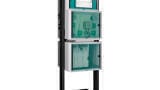
content of 1 g of sample. The system used to carry out the test consists of: 814 USB Sample Processor, 905 Titrando, 800 Dosino, Solvotrode and the tiamo™ software.
The method suggested in ASTM E 1899-08 is based on the reaction of the primary and secondary hydroxyl groups with excess toluene-4-sulfonyl-isocyanate (TSI) to form an acidic carbamate. The latter can then be
titrated in a non-aqueous medium with the strong base tetrabutyl-ammonium hydroxide (TBAOH).
The method suggested in DIN 53240-2 is based on the catalyzed acetylation of the hydroxyl group. After hydrolysis of the intermediate, the remaining acetic acid is titrated in a non-aqueous medium with alcoholic KOH solution.
The two methods allow, for example, the determination of polyols and oxooils without any tedious and time consuming sample preparation and is therefore a big benefit for laboratories that have to analyse a great number of these samples per day.
PIN 27.4 Aug/Sept 2026



 Product directory


.jpg)









.jpg)
.jpg)