Analytical instrumentation
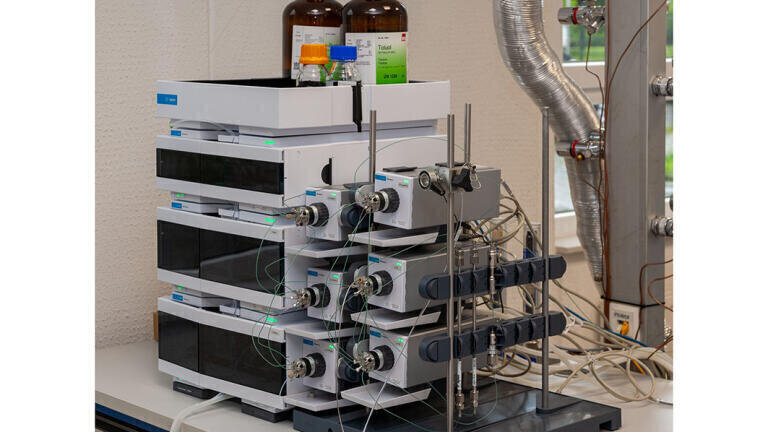
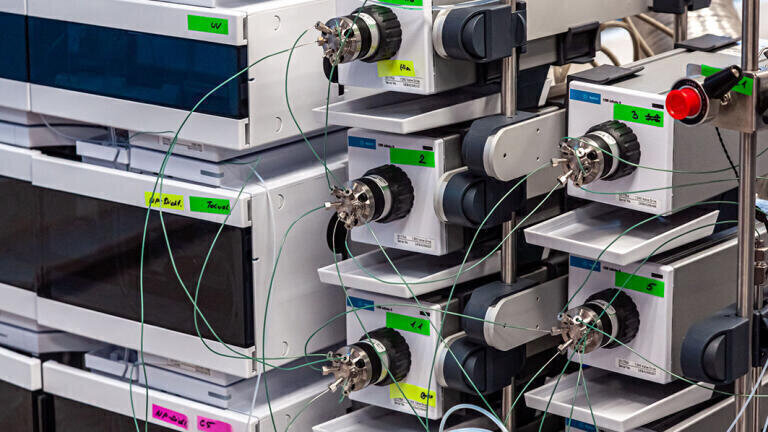
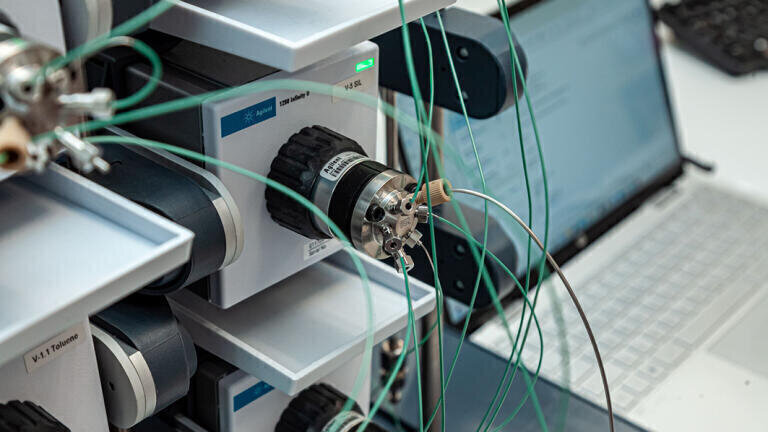
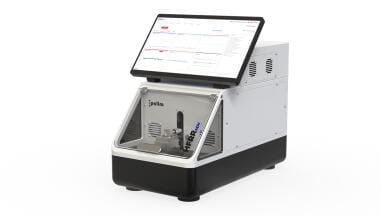
High-performance liquid chromatography (HPLC) has emerged as a key technology for the analysis of bitumen and heavy crudes, particularly in the determination of saturates, aromatics, resins, and asphaltenes (SARA). The SARA fractionation process is essential for characterising the composition of crude oils, yet conventional methods tend to be very time-consuming, requiring up to five days for completion. The SARA-HPLC-Analyser from JAS offers a cost-effective and highly reproducible alternative, reducing analysis time while improving precision and efficiency.
The JAS SARA-HPLC-Analyser requires only dilution prior to injection, thus eliminating the need for complex sample preparations. The process leverages the differential solubility of SARA fractions in polar and non-polar solvents. Initially, the sample is diluted in toluene and injected directly into the system. Pentane serves as the first mobile phase to separate the saturates, while the columns are subsequently dried using ethane. The second mobile phase, toluene, then dissolves and elutes asphaltenes, resins, and aromatics from their respective stationary phases. The resulting chromatogram distinctly separates total aromatics, resins, and asphaltenes, ensuring precise quantitation.
Automation of the SARA-HPLC-Analyser is achieved using Agilent OpenLab CDS Software, which controls the LC pumps and valve switching for fully automated analysis. The system resets automatically after each run to ensure a continuous operation without manual intervention. Entire analysis, including system reconditioning, is completed in approximately 245 minutes, a significant reduction in analysis time, compared to conventional methods. Solvent consumption per run is minimal - only 120 mL of toluene and 180 mL of n-pentane are required, therefore greatly reducing the costs.
The system utilises commercial HPLC columns with a JAS proprietary PTFE column, to ensure compatibility and ease of integration. The SARA-HPLC workflow has been rigorously validated. The system shows a repeatability of less than 2.5% for all analytes, compared to the 20–30% variation typically observed in manual procedures. A comparative analysis of multiple batches was also performed. The results demonstrated the reliability of JAS SARA-HPLC system.
In conclusion, JAS SARA-HPLC-Analyser provides an efficient and accurate solution for crude oil analysis. The system streamlines the traditionally labour-intensive SARA fractionation process. The combination of automation, reduction in solvent consumption, and enhanced reproducibility demonstrate this system is an important advancement in SARA analysis of crude oils and bitumen.
PIN 27.4 Aug/Sept 2026


 Product directory


.jpg)






.jpg)
.jpg)

.jpg)