Analytical instrumentation
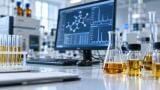
Traditionally anchored in laboratory analysis and periodic sampling, quality measurement is moving closer to the process, driven by the need for greater operational flexibility and tighter specifications.
Online gas chromatography remains central to this shift, particularly for compositional control in distillation and blending.
However, its role is expanding from verification to active process insight.
Improved reliability and better integration with control and monitoring systems are enabling near-real-time visibility of product composition.
At the same time, other analytical technologies are becoming more prominent.
Spectroscopic methods and impurity-specific instruments are increasingly deployed as continuous or semi-continuous monitors rather than occasional checks.
In emerging hydrogen and low-carbon process contexts, continuous quality monitoring is becoming essential to ensure compatibility with downstream equipment and customers.
This evolution places new demands on monitoring teams.
Analysers must now be treated as critical operational instruments, with maintenance regimes comparable to those of conventional sensors.
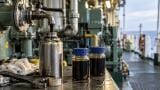
Sampling systems, often the weakest link, require careful design and ongoing attention to ensure representativity and response time.
Rather than serving purely as evidence of compliance, analyser outputs increasingly inform operational decisions, troubleshooting, and optimisation.
Many sites adopt advisory approaches first, using quality data to guide operators, before moving toward closed-loop control once confidence in reliability and failure modes is established.
Quality monitoring is becoming embedded in the daily operation of petrochemical processes, shaping how plants respond to variability and maintain performance.
As analysers continue to mature, the boundary between process monitoring and quality monitoring will become ever harder to draw.
PIN 27.4 Aug/Sept 2026

 Product directory









.jpg)




.jpg)