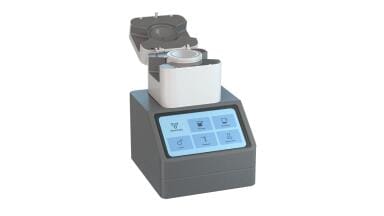
Analytical instrumentation
Published over 12 years ago. See the latest and most current information on Analytical instrumentation.
This is achieved by adding a specific quantity of a substance with a known concentration (called the titrant) to the substance whose concentration is unknown and is desired (called the analyte). The titrant is added little by little to the analyte until the two substances stop reacting with other - a stage known as neutralisation, or the equalisation point. From this, scientists can determine the concentration of the unknown solution.
There are several different methods of titration, including acid-based titrations, oxidizing-reducing titrations and the Karl Fischer titration technique. However, the standard method involves using a colour indicator in the analyte, which will react with the titrant and make it obvious when the equalisation point has been reached through the changing of colour of the solution. Here are the basic steps of a titration process:
1) Clean all equipment using distilled water.
2) Pour a precisely measured quantity of analyte (the substance which you wish to discover the concentration of) into an Erlenmeyer flask or beaker and dissolve. Make sure you measure and record the amount of solution used to dissolve the analyte.
3) Add several drops of colour indicator to the beaker, swirling it to mix the two solutions.
4) Fill up the burette with the titrant (the substance whose concentration is known) in liquid form and record its volume.
5) Place the burette in a burette stand, taking care to ensure its tip is not touching any surfaces or objects.
6) Place the beaker underneath the burette tip.
7) Turn on the stopcock of the burette so that gradually the solution is added to the beaker, little by little. Swirl the beaker as it is added to ensure the solutions mix.
8) Repeat until the solution changes colour, which indicates it has reached its equalisation point.
9) Calculate how much of the solution in the burette was used by subtracting its current volume from its original volume.
10) Use the raw data to work out the concentration of the analyte.
If you wish to learn more tips and tricks when practicing titration, Mettler Toledo has published a helpful Good Titration Practice Guidebook, which is available for free download.
Titration is being used in a wide variety of fields and practices, from determining the acidity of waste vegetable oil in order to accurately neutralise it, to testing for diabetes by detecting the presence of excess glucose in urine. As techniques of titration become more developed and sophisticated, its importance to such fields as the oil and petrochem industry is increasing. You can read more about such techniques and their growing value in the article The Next Generation in Titration: Clever, Compact, Capacitive Technology.
PIN 27.4 Aug/Sept 2026



 Product directory


.jpg)










.jpg)

.jpg)