Analytical instrumentation
Published over 7 years ago. See the latest and most current information on Analytical instrumentation.
Oil spills pose one of the world's most serious environmental threats, with incidents like the 2010 BP Deepwater Horizon disaster seeing an estimated 4900 barrels of crude oil pour into the ocean. Cleaning up the mess is notoriously difficult, however thanks to researchers at Germany's University of Erlangen-Nuremberg a new magnet-powered technique could soon come into play.
The interdisciplinary group of researchers was led by led by Prof. Dr. Marcus Halik and developed an innovative method of removing oil spills from the water surface using functionalised iron oxide particles. The particles actively attract oil and can then be removed from the ocean in a way that's safe, cost-effective and environmentally friendly.
The findings were published in the journal Advanced Functional Materials and explain how the team used a self-assembled monolayer to modify functionalised iron oxide particles so that they absorb only hydrocarbons. This includes light chemical substances like alkanes and aromates, as well as petrol, diesel and crude oil.
"The new sorbent material provides the opportunity for an efficient, reliable, inexpensive, and environmentally friendly removal of hydrocarbons from water," reads the abstract.
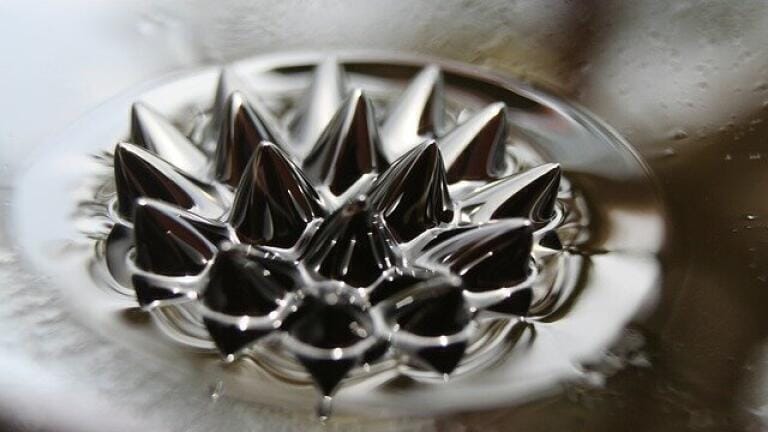
An online video created by the team shows how iron oxide power is used to transform liquid oil into a fine particle substance that binds to magnets. The magnets boast an impressive surface to volume ratio and can expand by up to 14 times their original size when loaded with fine particles. Thanks to the highly stable nature of the core-shell sorbent material, the magnets can be reused for several extraction cycles, which adds to the technique's eco-friendly credentials.
The researchers hope that in the future the magnetic system can be used to fast-track oil spill clean-up efforts and minimise the impact of environmental contamination. Halik and his team are currently working with partners to scale up the manufacturing process and launch the technique on an industrial scale.
Experts are continually developing new ways to heighten efficiency and reduce environmental footprints. For a closer look at the latest breakthroughs don't miss 'ASTM D86 Distillation of Light Hydrocarbon Samples – Can it be replaced by gas chromatography to deliver an automated, faster and safer analysis?', which spotlights how the combination of the 5.8 minute Fast-GC method and StillPeaks Detailed Hydrocarbon Analysis with the StillPeaks D86 application is being used to reliably predict D86 cut points of gasolines and light hydrocarbon blend feeds.
PIN 27.4 Aug/Sept 2026


 Product directory


.jpg)









.jpg)
.jpg)