Analytical instrumentation
Published over 9 years ago. See the latest and most current information on Analytical instrumentation.
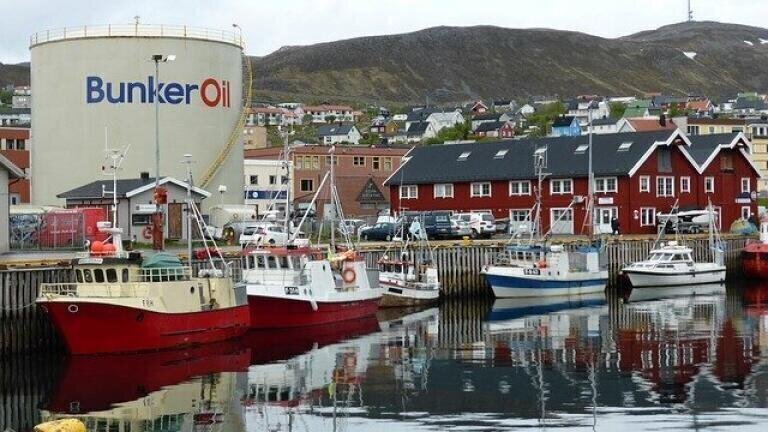
Ranked as the fourth biggest oil producer on the planet, Norway is no stranger to crude. And like most major oil producing nations, the volatile state of the market has seen production fluctuate over the past few years. But unlike its fellow producers, Norway seems to have escapes the downward trend that’s been plaguing the industry. While the latest preliminary data shows a long-term decline since November, Norwegian oil and gas production is up for the third year in a row.
The government data comes from the Norwegian Petroleum Directorate, and revealed that offshore production slumped drastically at the end of the year. In December, the government reported that total preliminary production of oil, natural gas liquids and ultra-light condensate averaged almost 2.1 million barrels per day. This represents a 3% fall from November’s levels, and a drop of 60,000 barrels per day.
While December was a little dark, the national regulator also confirmed that in 2016, full-year production was higher than the previous year. This represents a third consecutive year of gains, despite the fact that low crude prices have been plaguing the industry.
"The oil production increased for the third consecutive year in 2016, and gas production was at the same level as the previous year, which was a record year for production," the national regulator commented in its monthly report. "The high level is in part due to good regularity on the fields, and the fact that various efficiency measures have led to substantial reductions in operating and exploration costs."
So what’s contributed to the positive full-year production figures? A new discovery from Statoil radically boosted national production, with the energy company striking gold in the northern waters of the Norwegian Sea. According to preliminary estimates, the discovery could be worth at least 17 million barrels of oil.
NPD Director General Bente Nyland was quick to praise Norway for its resilience, asserting that national companies have adjusted well to the drastic shift triggered by low crude prices. She also reminded the country to continue focussing on the big picture, as opposed to immediate benefits.
"We must prevent the focus on short-term profits from coming at the expense of long-term value creation for society," she said in a statement.
While it’s good news for Norway, analysts are warning that the positive figures could add to the ever-present risk of oversupply. Just weeks ago, OPEC nations agreed to a short-term 2017 production cap of around 32.5 million bpd in a bid to stabilise the market. Whether or not Norway’s flourishing exploration and production landscape puts this at risk it yet to be seen.
Given the volatile state of the market, producers and refiners are continually exploring new ways to reduce costs. ‘Novel Detector Dramatically Simplifies PIONA Analysis’ introduces the latest techniques being used to simplify and shorten complex chromatographic separation.
PIN 27.4 Aug/Sept 2026


 Product directory


.jpg)








.jpg)

.jpg)