Viscometer
In many industrial processes, monitoring fluid behaviour is crucial. Whether producing fuels, polymers, food products, or pharmaceuticals, viscosity is a key indicator of process performance. If viscosity starts to fluctuate, it can indicate issues with formulation, temperature control, or raw materials – often before those problems become apparent elsewhere in the process.
That is why continuous viscosity measurement has become an increasingly valuable tool for process engineers. By monitoring viscosity in real time, operators can react quickly to changes, stabilise production conditions, and maintain consistent product quality.
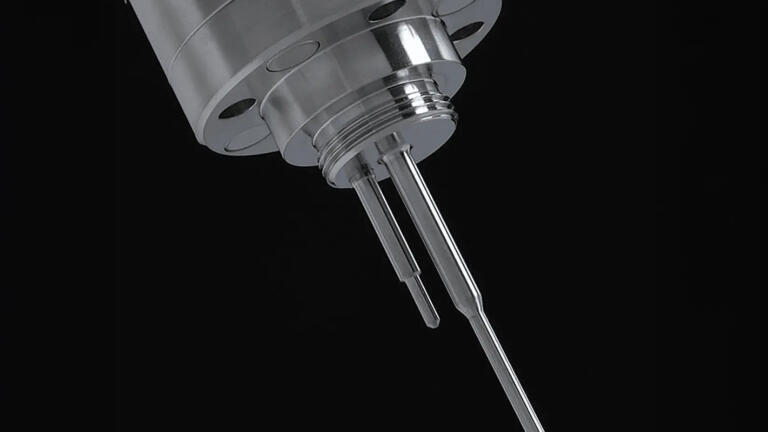
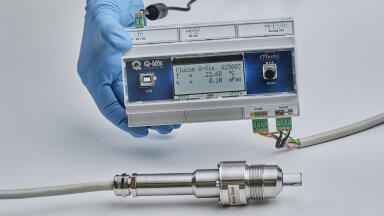
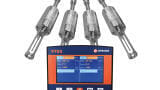
Sofraser has specialised in online viscosity measurement since 1972 and has launched a new instrument to make this type of monitoring easier and more accessible. The company’s 9300 viscosity and temperature transmitter offers continuous measurement of both parameters, providing operators with a clear picture of how fluids behave during production.
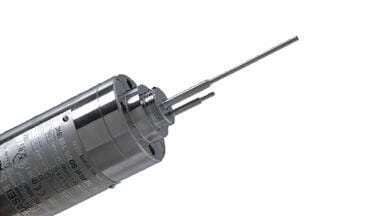
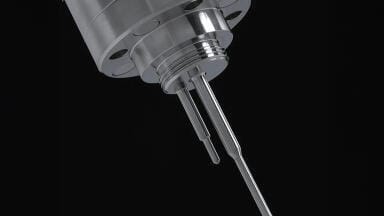
The transmitter works with Sofraser’s MIVI sensors and uses the company’s patented resonant vibration viscometer technology. In simple terms, the system measures how the vibration of a sensing element changes when it is immersed in a fluid. Because the vibration response is influenced by viscosity, the instrument can calculate and display the product's viscosity in real time. Temperature is measured simultaneously, which is important because viscosity often varies significantly with temperature.
One of the main goals of the design is simplicity. The transmitter includes a four-line backlit LCD display and eight navigation buttons, enabling users to configure and operate the instrument directly from the front panel. Operators can view measurement values, check analogue outputs, and adjust parameters on site without needing external software. This can significantly speed up installation, commissioning, and troubleshooting, especially in busy production settings.
For process integration, the instrument provides standard 4–20 mA analogue outputs for both viscosity and temperature, enabling straightforward connection to PLCs and other control systems. RS485 Modbus RTU communication is also available for the exchange of digital data with monitoring platforms and supervisory control systems.
Because viscosity monitoring is relevant in so many industries, the transmitter has been designed with versatility in mind. Potential applications include chemical and polymer processing, petroleum products, food and beverage production, pharmaceuticals and biotechnology, as well as inks, paints and coatings manufacturing.
By combining robust sensor technology with straightforward operation and integration, the new transmitter aims to provide manufacturers with a practical way to continuously monitor viscosity. For many processes, that visibility can make the difference between reacting to a problem after it occurs and identifying it early enough to keep production running smoothly.
PIN 27.4 Aug/Sept 2026


 Product directory



















.jpg)