Viscometer
Published over 12 years ago. See the latest and most current information on Viscometer.
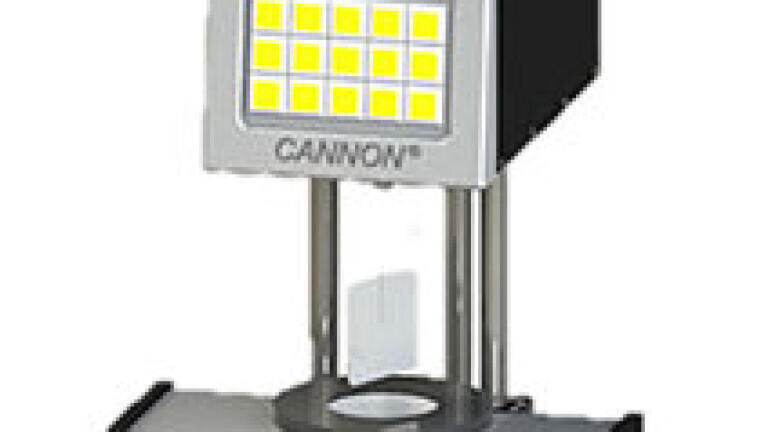
Cannon Instrument Company (USA) has announced development of a new digital rotational viscometer.
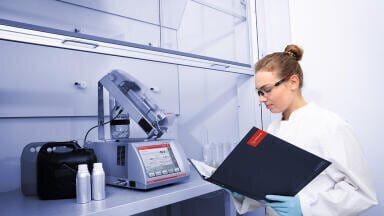
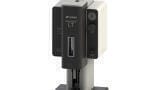
The Cannon Thermoelectric Digital Paddle Viscometer (TE-DPV) has been designed to accurately measure the viscosity of asphalt emulsions, residual oils, slurries and similar materials between 30 and 3,000 centipoise (mPa•s) at temperatures of 25°C , 40°C, 50°C, 80°C, and 100°C. The TE-DPV is totally self-contained and can also be used for other applications consistent with its temperature control and viscosity measurement capabilities. The TE-DPV follows Standardised Test Methodology: ASTM D7226.
The TE-DPV has been designed to provide a rugged cost-effective and automated alternative to older, labour-intensive and less precise instrumentation and methodologies. The instrument is easy to clean and can determine the viscosity of liquids, yielding results with an accuracy of five percent or better for most materials.
A digital display on the front panel of the head unit indicates dynamic viscosity as cP or mP.s, or as kinematic viscosity as cSt or mm2/s if a known density value is input by the operator. Upon completion of a test, the display indicates the final test temperature and viscosity.
Contact Cannon Instrument Company for more information
PIN 27.5 Oct/Nov 26


 Product directory


.jpg)












.jpg)