Measurement and testing
Published over 13 years ago. See the latest and most current information on Measurement and testing.
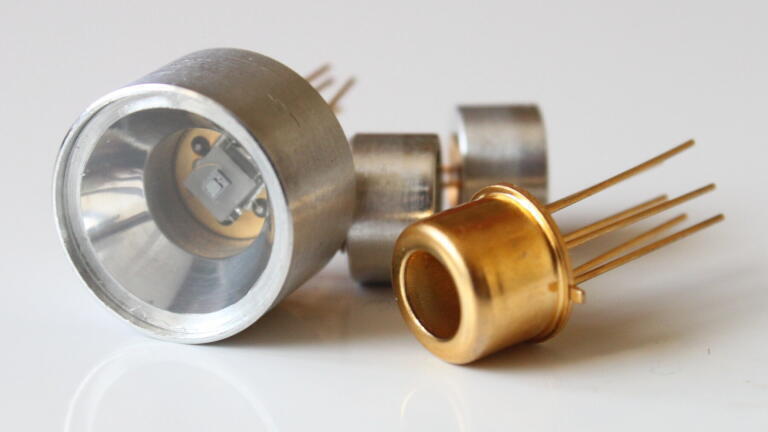
All hydrocarbons have the main absorption bands in 3.3-3.4 µm, where C-H stretching takes place; this can be used in optical analysis. LED Microsensor NT (Russia) offers a powerful element base for the analysis in 3.4 µm region: Lms34LED light-emitting diodes and Lms36PD-05 photodiodes. Their diodes give the opportunity to construct the devices which possess many advantages: compact size, low power consumption, short response time, long life time, wide operation temperature ranges, high selectivity and accuracy due to the relatively narrow emission band of LEDs. LED Microsensor's LED-PD optopairs can be applied to the detection of the following hydrocarbons: linear alkanes (methane, ethane, propane, butane etc.), branched alkanes, cyclic alkanes, alkenes (methylene, ethylene etc. and their polymers), alkynes and aromatic hydrocarbons.
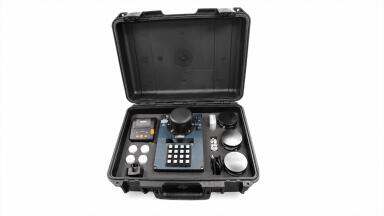
For the quick initial experiments with hydrocarbon detection LED Microsensor offer all required electronics: LED drivers for the LED power supply and photodiode amplifiers. The new on-board evaluation system - MDS-4 type which includes LED-PD optopair with all the needed electronics on a single board has been recently released, and will help to make your experiments easy and convenient.
PIN 27.5 Oct/Nov 26

 Product directory


.jpg)





.jpg)


.jpg)