Measurement and testing
Published over 13 years ago. See the latest and most current information on Measurement and testing.
With regards to national and international regulations of water markets, the constant control of water quality becomes more and more important. The continuous monitoring from complex industrial and municipal waste water over process water to pharmaceutical pure water occupies a special place, from an ecological as well as economical point of view.
A whole variety of pollutants can be present in water, which cannot be determined individually. This is why the so-called sum parameters are used such as the TOC (Total Organic Carbon) and the TNb (Total Nitrogen bound). For an exact TOC/ TNb measurement all carbon/ nitrogen compounds must be reliably combusted.
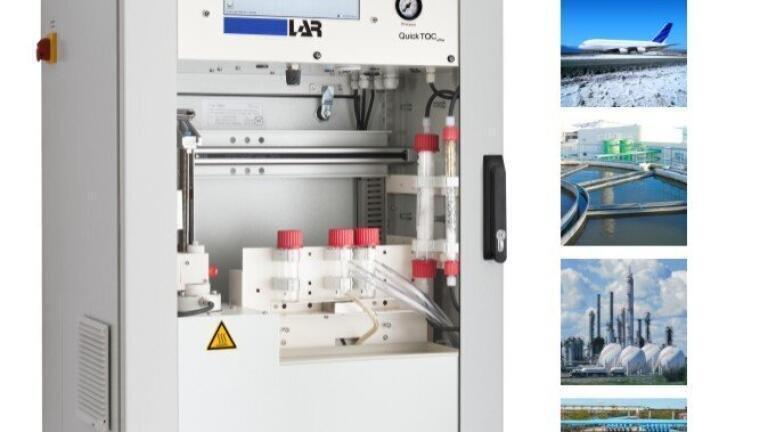
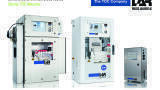
LAR Process Analysers AG (Germany) developed the ultra high temperature method at 1,200°C that does not need any catalysers. Below this temperature a complete oxidation of hydrocarbons is evidently not possible. Carbon bonds of carbonates for example only break fully at a combustion temperature higher than 1,150 °C. Basically, lower temperatures deliver less exact measurement results. For this reason the high temperature catalytic oxidation at 680 to 1,100 °C uses catalysts to improve their oxidisation potential. However, the performance of the catalysts is lowered over time. This affects the measurement results. It constantly makes new calibration necessary until eventually the catalyst has to be replaced.
Further measurement methods such as the photochemical and wet chemical oxidation require oxidants and other hazardous chemicals for the determination of sum parameters. The need of chemicals is based on their oxidation principle, which needs these substances to support their oxidation potential. Furthermore, the photochemical oxidation is not applicable for all applications. It only suits for the determination of TOC in clean water. Additionally, the oxidation potential of chemical methods is relative since particles and more complex carbon compounds can only be partially digested or even not at all. With regards to the latest standards of occupational safety and environmental protection these methods are not recommended.
The LAR ultra high temperature method at 1,200 degrees Celsius guarantees the complete oxidation of carbon and nitrogen bonds, which results in exact and reliable measurements. On the market, the catalyst-free thermal oxidation technique has proved itself in hundreds of applications worldwirde.
PIN 27.5 Oct/Nov 26

 Product directory


.jpg)









.jpg)

.jpg)