Measurement and testing
Wet gas scrubbers are a crucial technology for mitigating emissions of sulphur dioxide (SO₂), nitrogen oxides (NOₓ), and other pollutants within the petrochemical, refining, and associated industries. These systems depend on the injection of water or chemical solutions into exhaust gas streams to absorb and neutralise contaminants before atmospheric release. The ability to precisely monitor the volumetric and mass flow of gas entering the scrubber under variable and moisture-laden conditions defines their effectiveness.
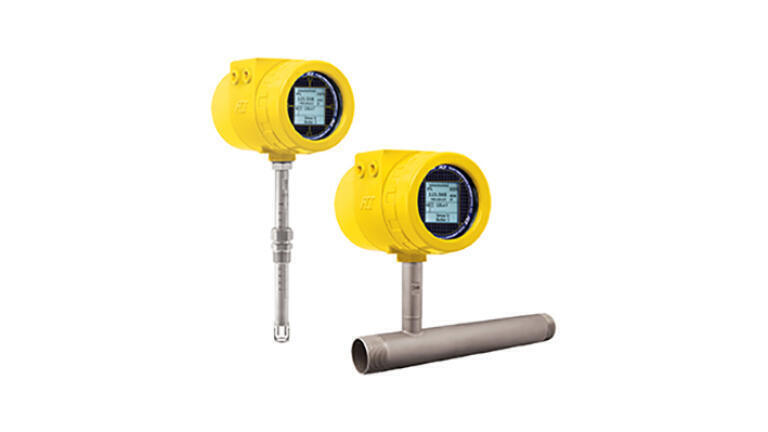
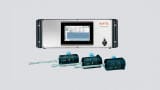
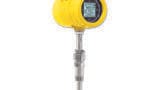
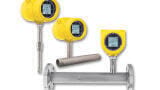
For such applications, the use of thermal dispersion flow measurement, such as Fluid Components International’s ST80 Series, delivers clear operational advantages. Pitot tubes often clog in wet gas environments and require regular cleaning, the ST80 however offers direct mass flow measurement using a no-moving-parts sensing element, therefore avoiding mechanical wear and contamination-induced drift.
The conditions commonly associated with scrubber inlets, such as 2% moisture content in ducts from 15 to 54 inches (381 to 1371.6 mm) in diameter, flow rates ranging from 66.56 to 100,000 SCFM, pressures of 5 psia in H₂O (g), and temperatures between 21.1°C and 35°C—need robust and precise instruments. The ST80 meets this need, offering a 1000:1 turndown ratio, accuracy of ±1.0% of reading (±0.5% full scale), and repeatability of ±0.5%.
The meter’s AST™ thermal measurement mode and proprietary Wet Gas MASSter coating are of particular relevance to the hydrocarbon sector, which directs condensate away from the sensor’s surface to ensure consistent signal integrity in saturated environments. This contributes to stable measurement, reducing unplanned maintenance interventions, and supporting long-term system reliability.
With a high-integrity enclosure and support for HART, Foundation Fieldbus, PROFIBUS, and Modbus communications, the ST80 integrates smoothly with existing control systems. A configurable display option offers real-time visualisation of process variables, such as flow rate, temperature, and totalised volume, along with alarm indicators and diagnostics.
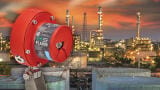
The ST 80 Series is certified to an extensive range of international safety standards, including ATEX, IECEx, UKEX, FM, and SIL. It is ideally suited to deployment in hazardous areas ubiquitous to the petrochemical value chain. In systems where emissions compliance, process efficiency, and instrumentation longevity intersect, the use of thermal flow metering technology offers a proven return on investment.
PIN 27.4 Aug/Sept 2026


 Product directory










.jpg)


.jpg)