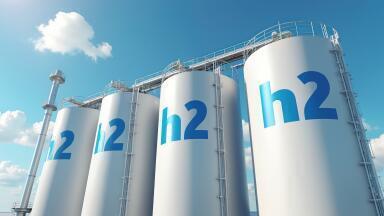
Hydrogen fuel
Published over 11 years ago. See the latest and most current information on Hydrogen fuel.
A proposed ASTM International standard will provide a screening process to determine microbial contamination in fuel.
The proposed new method will join four existing fuel microbiology methods and practices under the jurisdiction of ASTM D02.14 on Stability and Cleanliness of Liquid Fuels. The subcommittee welcomes participation in this standard’s development, particularly from those interested in joining an interlaboratory study for the test method.
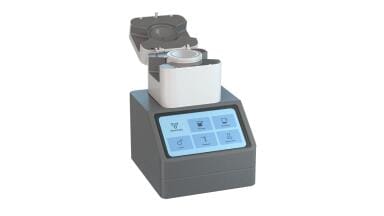
Workers involved in fueling vehicles and aircraft will use the standard (WK48076, Test Method for Screening Fuels and Fuel Associated Waters for Microbial Contamination Lateral Flow Immunoassay) to test levels of microbial contamination before beginning the fueling process, thus avoiding the costs of decontaminating vehicle fuel tanks.
The test described in the proposed standard provides a semi-quantitative indication of the presence or absence of substantial levels of microbial contamination in fuel-system samples. Testing in accordance with the proposed standard will provide preliminary information that will indicate whether more quantitative testing is needed.
ASTM member Frederick Passman, president, Biodeterioration Control Associates Inc., notes that, while microbiological damage is well documented, the relationship between contamination and damage is very complex.
“Microbes detected in fuel samples are generally dormant but have the potential to become revitalised when conditions permit,” says Passman. “Nearly all contaminating microbes are found on system surfaces, such as tank and pipeline walls, rather than in fuel samples. Although the population density of contaminants is much greater in fuel-associated water than in fuel samples, it can be quite challenging to obtain samples that contain fuel-associated water. This standard will serve as a new tool to address that problem.”
PIN 27.4 Aug/Sept 2026


 Product directory


.jpg)
.jpg)