Fuel for thought
What Japan’s complex plastic recycling strategy means for petrochemical professionals and monitoring technologies.
By Jed Thomas
Japan, often lauded for its cleanliness and cultural emphasis on order, is seen by many as a global leader in plastic waste management.
With a reported plastic recycling rate of 87%, the country gives the appearance of a circular economy success story.
But dig deeper and a more nuanced picture emerges, one with important implications for professionals in the petrochemical sector and those tasked with process monitoring across the plastic lifecycle.
At first glance, Japan's numbers are impressive.
According to the Plastic Waste Management Institute, Japan generated approximately 8.2 million tonnes of plastic waste in 2021, of which 7.17 million tonnes were "effectively utilized", leading to that headline 87% recycling rate.
But here's the catch: 62% of this figure is thermal recycling—a practice that involves incinerating plastic to recover energy.
By European or American standards, thermal recycling would be categorized as energy recovery, not true recycling.
The actual material and chemical recycling rate in Japan hovers between 22-25%, closely mirroring European averages but falling short of circular economy ideals.
Japan has introduced ambitious policies, such as the Act on the Promotion of Resource Circulation for Plastics (2022), which aims to apply cradle-to-cradle principles across the design, retail, and disposal stages.
The goals include making 100% of plastic packaging recyclable or reusable by 2025 and ensuring all plastic waste is either reused, recycled, or thermally recycled by 2035.
However, for petrochemical firms, these targets signal a shift in feedstock composition and quality.
Mechanical and chemical recycling processes depend heavily on waste sorting precision, feedstock purity, and polymer compatibility – factors that must be tightly monitored and controlled.
Achieving a circular plastics economy demands robust monitoring throughout production, sorting, and recycling phases.
This is where process instrumentation and sensor technologies become pivotal:
Spectroscopy and AI-powered imaging systems are increasingly used to sort plastics by resin type in materials recovery facilities (MRFs).
Electrostatic separation technologies, like those commercialized by Mitsubishi Electric, utilize the distinct charging properties of different polymers to improve recycling precision.
AI-enhanced variants are in development to autonomously sort complex waste streams.
Gasification and chemical recycling, as pursued by companies like Ebara, require precise thermal and compositional monitoring to ensure quality syngas production and pollutant control.
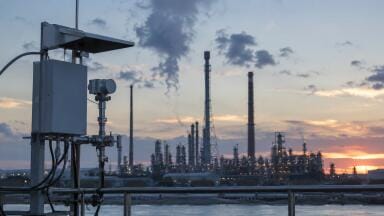
Emission monitoring from thermal recycling must be tightly regulated to align with Japan’s carbon neutrality goals, particularly given the CO₂ output from incineration.
For petrochemical professionals, this evolving technological ecosystem opens opportunities in instrumentation sales, maintenance, emissions analysis, and real-time quality assurance across recycling plants and waste-to-energy facilities.
Culturally, Japan still grapples with hyper-packaging, fuelled by traditions of gift-giving and hygiene.
While government campaigns like “Plastic Smart” and community efforts like Kamikatsu’s Zero Waste Village showcase progress, the dominance of multi-layered and contaminated packaging continues to obstruct efficient mechanical recycling.
This creates a demand for next-gen recycling-compatible packaging materials, standardized polymer usage, and greater chemical transparency – all of which require tight monitoring from production through disposal.
So, has Japan figured out how to produce plastics in a circular fashion? Not quite, but it’s laying down a roadmap others can learn from.
The country has built an exceptionally detailed infrastructure for collection and waste separation, and it is pioneering technologies in chemical recycling and AI-driven sorting.
Yet, the gap between ambition and realization – between high thermal recycling and low material recovery – remains wide.
For petrochemical professionals, this space is fertile ground: sensor integration, advanced materials analytics, emissions tracking, and digital process monitoring will be indispensable in bridging that gap.
Japan’s circularity journey may still be unfolding, but it offers a clear signal: the future of plastics is inseparable from the future of process monitoring.
PIN 27.4 Aug/Sept 2026



 Product directory


.jpg)